

Vento-Tormo Group
Cellular Genomics
Tissue biology through the lens of women’s health
We focus on conditions that affect women disproportionately, including gynaecological disorders and inflammatory diseases.
We find the reproductive system fascinating. It is a dynamic, ever-changing environment shaped by hormonal cycles, tissue-resident immune cells and age. The most striking example is the endometrium, the uterine mucosal lining, which sheds and then regenerates perfectly and without scarring — roughly 400 times over a lifetime.
This system is crucial for the perpetuation of the species and the transmission of genetic information to the next generation, and equally for maternal and fetal health and the lifelong health of the newborn. Defects in communication between the uterus and the placenta, a transient extraembryonic tissue, can profoundly alter developmental outcomes. Beyond reproduction, the hormones this system produces place it at the centre of women’s health more broadly. Understanding it comprehensively therefore matters regardless of whether a woman chooses to have children.
Reproductive disorders are a major global health burden, and one that is too often endured in silence. Around 10% of people born with a uterus are affected by endometriosis, and ovarian cancer remains one of the most aggressive cancers affecting people with ovaries.
The reproductive system also offers a uniquely powerful window onto general rules of tissue physiology. During menstruation the endometrium is destroyed and becomes inflammatory, then resolves that inflammation itself in order to regenerate without scarring — a rare example of inflammation resolving in an entirely physiological setting, and a model for how we might improve repair at other epithelial surfaces. In pregnancy, the same tissue becomes immunomodulatory, allowing embryo and mother to coexist despite a genetic mismatch that could otherwise trigger rejection — a natural setting in which to study how immune tolerance is induced, with relevance well beyond reproduction.
Quantitative approaches to complex systems
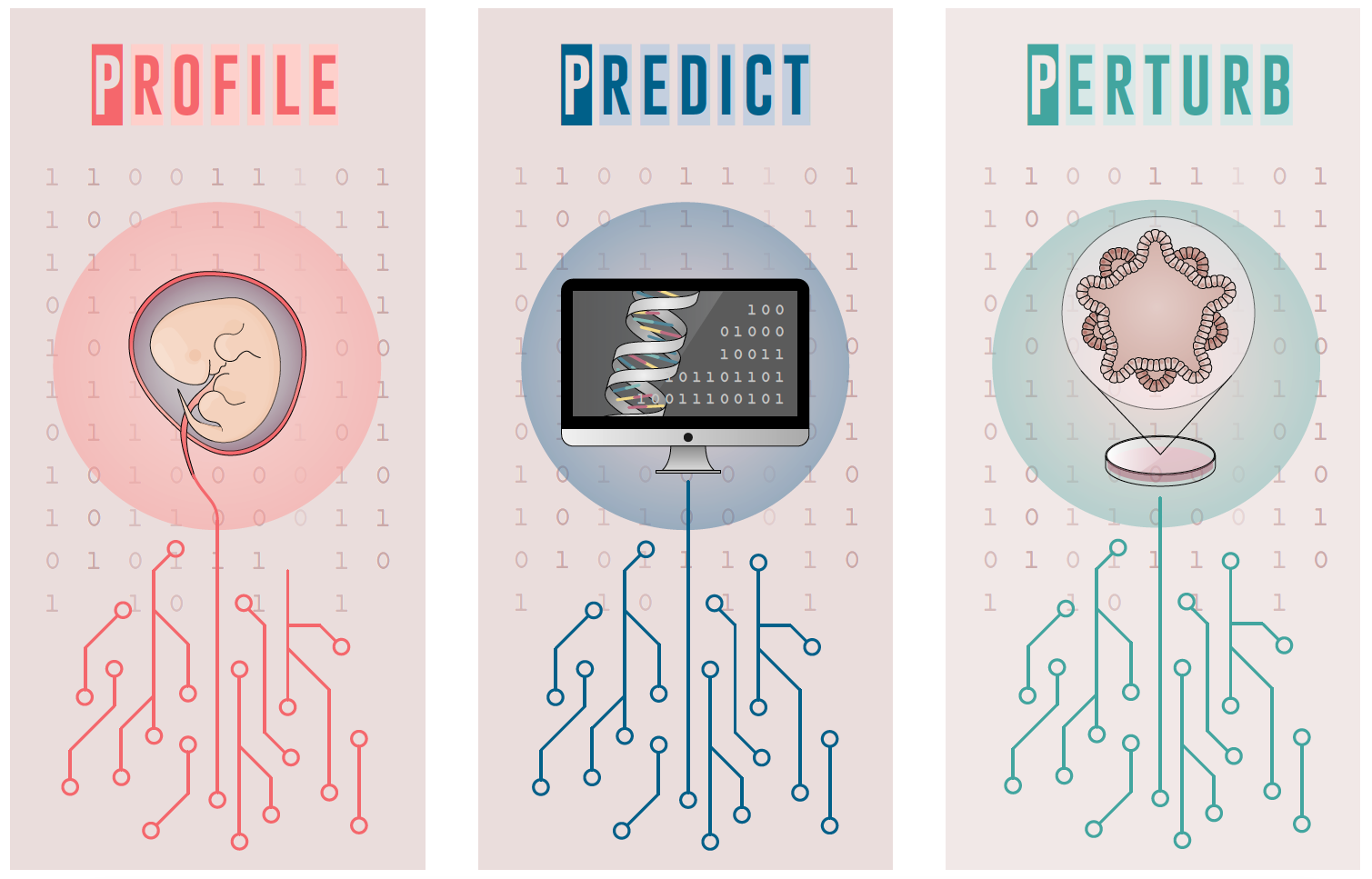
The complexity of the reproductive and immune systems demands a quantitative approach. Cells, as the fundamental unit of the human body, are the basis of our work. We operate within an iterative framework:
- Profile: We are building a large, systematically curated collection of diagnostic tissues in which routine histopathology, spatial multiomics, whole-genome sequencing and clinical outcome data are all available for the same patient samples.
- Predict: We use AI/ML to predict molecular and genetic state from tissue slides, and conversely to predict the histological consequences of a genetic variant.
- Perturb: We use in vitro models to run large-scale perturbations, read out by single-cell techniques, to establish causality.
Each turn of this cycle integrates experimental data with human datasets, refining our computational models and improving their predictive accuracy.
The lab
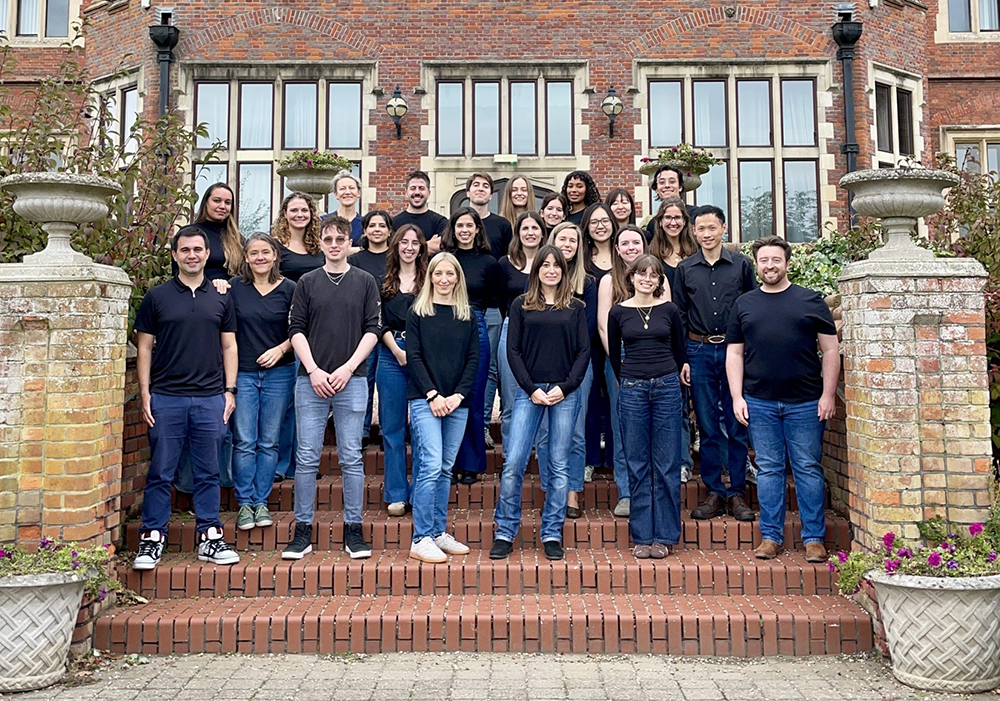
The lab is based primarily at the Wellcome Sanger Institute and is highly multidisciplinary, bringing together biologists with a range of expertise alongside engineers and data scientists. Most of our team members work across both wet and dry lab, generating hypotheses from data and then testing them at the bench. We collaborate closely with other groups working on the rules of tissue physiology.
I am also a Global Adjunct Principal Investigator at AITHYRA, the Institute for Biomedical Artificial Intelligence based in Vienna. There our work focuses on developing AI methods for tissue biology in close collaboration with Alex Tong and Xinyi Zhang.
Core team
Dr Anna Arutyunyan
Postdoctoral Fellow

Dr Loren Gibson
Research and Project Management Team Lead (Human Genetics and Generative Genomics)
Tarryn Porter
Senior Scientific Manager
Maria del Carmen Sancho Serra
Advanced Research Assistant
Previous core team member
Dr Clara Alsinet-Armengol
Postdoctoral Fellow
Related groups
Partners
We work with the following groups
External
Society for Endocrinology
Funding - Early Career Grant - Hassan Massalha
Hassan Massalha was awarded the Early Career Grant from the Society for Endocrinology in 2023.

Vento-Tormo R, …, Teichmann SA. Single cell reconstruction of the early maternal-fetal interface in humans. Nature 2018; 563: 347-353. doi: 10.1038/s41586-018-0698-6. Epub 2018 Nov 14.

Svensson V, Vento-Tormo R, Teichmann SA. Exponential scaling of single-cell RNA-SEQ in the past decade. Nat Protoc. 2018; 13: 599-604. doi: 10.1038/nprot.2017.149. Epub 2018 Mar 1.
