

Sanger Accelerator Awards for Postdoc Researchers
At the Wellcome Sanger institute, our Postdoctoral researchers are at the forefront of scientific knowledge and driving world-leading research. They are also training to be the next generation of leaders in genomics and beyond, so our Postdoc Programme provides diverse opportunities for career development. Since 2022, our SAAP awards have supported 11 Postdocs through £83.2K of funding.
“This year we received exciting applications from across our Science Programmes – including ideas for pilot projects, technology development and research visits – testament to the diversity of our Postdoc community. Following triage and interviews, our Scientific Panel decided to fund two awards. We’re excited to see what the winners achieve and how holding a SAAP helps accelerate them along their career trajectory.”
– Diane Swallow, Postdoc Programme Lead, Academic Programmes Team
Learn more about these talented researchers and their projects below.
The winners were selected for their innovative projects ideas that will further their own research interests in a variety of topics and power their career progression. Below the winners outline how they are using their Awards to accelerate their research.
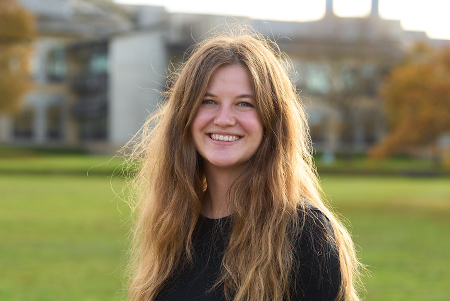
Dr Charlotte Wright has been awarded £4.5K to fund a research visit to the University Barcelona.
In an era of rapid climate change, we urgently need to understand how species adapt. Genetic differences between individuals provide the raw material for adaptation. A key process that generates these differences is the reshuffling of DNA that happens when parents pass their genes to offspring. Major changes to DNA, such as the fusion of two chromosomes into one, can alter how much reshuffling occurs, which could affect how easily a species adapts.
This project will investigate how large DNA changes influence genetic reshuffling in butterflies. To do this, Charlotte will use microscopy techniques, learnt through a collaboration with the Autonomous University of Barcelona, to directly look at chromosomes and follow the process of genetic shuffling in butterflies with different numbers of chromosomes. This will shed light on how genomes evolve and alter the ability of species to adapt in a changing world.
Charlotte shared: “Genetic shuffling is a fundamental process that allows new combinations of DNA to be passed on in each generation yet currently, we only know how this works and varies between species from a few well studied species such as humans. This award will allow me to be at the forefront of this research in butterflies.”
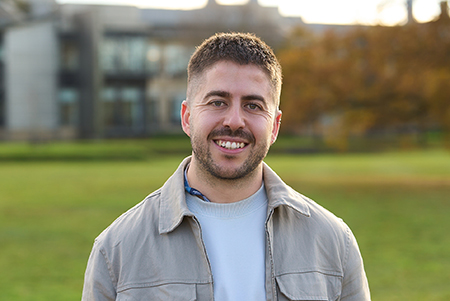
Dr Gonzalo Martinez has been awarded £9.3K to fund his research in macrophage profiling.
Macrophages are immune cells that act as the body’s “sensors.” They detect danger signals and adjust their behavior to fight germs, recruit other immune cells, or support tissue repair. In certain diseases, such as asthma or inflammatory bowel disease, these danger signals persist abnormally, locking macrophages into perpetuated harmful danger-response programs that damage the body – a process known as chronic inflammation. Yet, the genes responsible for driving these faulty responses remain unknown.
To address this, Gonzalo will capture detailed snapshots of how macrophages respond to 40 different danger signals. This will reveal which genes are activated in each situation and, by comparing this with patient data, uncover which programs become stuck in disease-causing states. Once these genes are identified, Gonzalo will use genome engineering to reprogram macrophage behavior, with the potential not only to correct chronic inflammation but also to harness these programs as therapies for other diseases, including cancer.
Gonzalo said: “The Sanger Accelerator Award is helping me deepen my understanding of how macrophages regulate gene expression in response to single pathological cues. This foundation is key to my long-term goal of engineering myeloid cells to address complex conditions by leveraging their most relevant functional programs to counter chronic inflammatory diseases. It is also giving me invaluable training in leadership and independence. Developing a funded project from concept to execution, managing resources and learning from each step is preparing me to translate bold ideas into impactful research.”
Dr Nicol Rueda is a postdoc researcher in Joana Meier’s group. Nicol focuses on how living organisms evolve and interact with their environment. To do this, she studies Heliconius butterflies to understand how the structure and organisation of the chromosomes change during reproduction. Her research aims to unravel the importance of such changes in the evolution of butterflies and moths.
Nicol will use funding from the Sanger Accelerator Awards to gain valuable experience via an overseas collaboration at the Curie Institute in France.
Nicol shared: “The award will allow me to learn 3D chromatin structure analysis and gain valuable experience in research project management. My visit to the Curie Institute will expand my international research network and help explore how sex chromosome-autosome fusions impact chromatin organization and gene expression, providing insights into species evolution.”
Nicol hopes these new skills gained will give her Heliconius butterfly research wings. Already, research has taken her to some exciting places for sampling, such as Colombia, and she continues to build her bioinformatics skillset. Nicol is also involved in training the next generation of butterfly evolution experts.
Dr Lewis Stevens is a postdoc researcher in Mark Blaxter’s group. Lewis is an evolutionary biologist interested in genome evolution in animals, with a particular interest in nematodes. Within the Blaxter group, Lewis generates and analyses large sequencing datasets to understand how nematode chromosomes have evolved. You can read more about that collaborative research on our blog ‘The Secret Lives of Nematodes’.
Lewis will use Sanger Accelerator Awards funding to test out new ideas that could generate new ideas and sampling methods that will help build more diverse nematode datasets. Data from these innovative studies will help when he applies for fellowships and future funding opportunities. As part of his fellowship applications, it is useful to be able to evidence that he has competed for and managed independently funded research.
Lewis said: “I want to study a broad range of parasitic nematode, including those that infect wild animals, but obtaining samples is challenging. The approach I’m trialling would allow me to collect all the necessary data using just the faeces of infected animals.”
Dr Jess Thomas Thorpe, a Janet Thornton postdoc Fellow in Mark Blaxter’s group, investigates the genomics and adaptation of the Isopoda, a group that includes woodlice, sea-slaters and their relatives all around the world. Jess generates and analyses genomes of isopods to help uncover insights about how they have adapted to life on land. She also co-ordinates the collection and genome sequencing of all ~240 species of UK isopods for the Darwin Tree of Life Project.
A recent feature by collaborators at the Marine Biological Association discusses her Darwin Tree of Life project contributions and sampling efforts. In addition, with collaborators from across the world, Jess is collecting and sequencing the genomes of representatives from each isopod suborder/super-family, to understand the timing and pattern of isopod evolution.
Jess said: “This award will allow me to collect tiny cryptic subterranean isopods from caves and beaches in Europe, and sequence their genomes using single-specimen sequencing methods. These methods so far only work on creatures with smaller genomes (e.g. nematodes, tardigrades) – I will work with experts in the Blaxter lab to extend single-specimen genome sequencing to species with much bigger genomes, in this case isopods. Not only will I gain valuable lab expertise, I will be collaborating with expert isopod cave biologists and taxonomists in the field, building up important connections and data for future grant applications, and most importantly, shedding light on a fascinating understudied suborder of isopods.”
Ana-Maria Cujba is a postdoc researcher in the Teichmann Group, co-leading two projects: age-specific COVID-19 responses in airway organoids, and cell atlasing of the human vasculature across tissues.
Anna-Maria used the award to visit her research collaborator, Michaela Mueller, in Helmholtz-Munich to learn advanced Artificial Intelligence (AI) techniques. Her aim was to create an ‘immune cell atlas’ by correlating immune cells with disease outcomes.
Blood-borne immune cells are central to the body’s immune response against viral diseases. Despite the team and collaborators analysing millions of cells from over 2,000 people, both with and without COVID-19, combining the data is challenging.
Anna-Maria said: “The award offers me the opportunity to learn a new skill: state-of-art machine learning approaches for large-scale single-cell data analysis. My visit to Helmholz-Munich will be my first time working outside the UK, and will help expand my research network internationally. I am very grateful for the supportive environment for postdocs at Sanger.”
Ellen Cameron received a Sanger Accelerator Award in her final year as an EMBL-EBI–Sanger Postdoc (ESPOD) researcher, co-supervised by Robert Finn and Nick Goldman (both EMBL-EBI) and Mark Blaxter (Sanger, Blaxter Group). She is an ecologist interested in applying advanced molecular techniques to characterise ecological community structures and species interactions.
Lichens are symbiotic systems of fungi and algae, which are found in diverse habitats including wood and stone. A common UK lichen called Xanthoria parietina is well-studied, but scientists do not know how its fungi and lichen interact at the molecular level.
Current techniques are limited to predicting species interactions, so Ellen used her award to test alternative advanced molecular methods. Ellen’s aim was to create the first single-cell atlas for a lichen species, enhancing scientific understanding of symbiotic systems and their environmental interactions.
Ellen said: “The award will provide me with critical experience in new molecular techniques and data analyses, as well as research project management. I am incredibly excited to be working at the forefront of the field, with the potential to advance our understanding of the diversity of species interactions in lichen symbioses. The results could enhance the fields of microbial ecology and symbioses biology.”
Karin Näsvall is in her first postdoc researcher role in the Meier Group. Her long-term goal is to become an independent researcher, working at the forefront of research into genome structure evolution.
Recombination, or reshuffling of genetic material, preserves genetic diversity in species and may confer survival benefits. However, scientists have a limited knowledge of the process. Existing techniques are cumbersome because they involve rearing large numbers of offspring to estimate the diversity.
With this award, Karin looked to develop a new method using butterfly sperm cells to create a detailed genome recombination map. If successful, the approach could be a fast and cost-effective way to explore recombination in organisms across the tree of life, benefitting research into biodiversity, speciation and conservation.
Karin said: “As well as exploring a new method to understand the recombination process, the award will enable me to lay the foundation for my future research direction. I aim to scale up the analysis of recombination rates across whole groups of butterflies, with and without chromosomal rearrangements, to disentangle the various evolutionary forces on speciation and diversity.”
Sarah Buddenborg, a postdoc researcher in the Doyle Group, research focuses her research on characterising the development and disease stages of parasitic worms (helminths) that infect humans and animals.
Parasitic worms (or helminths) infect over 1.5 billion people and countless animals worldwide, causing widespread health problems. Understanding the survival and adaptations of these worms inside their hosts may enable researchers to develop better treatments.
Sarah used her award to make cell maps of female and male gastrointestinal (gut) worms called Haemonchus contortus, which infect sheep and goats. Her work sought to help reveal how these worms grow, thrive and respond to drug treatment. It also looked to find differences in cell types and functions between male and female worms, which could help scientists to identify new drug targets.
Sarah said: “I will begin my project shortly after returning to work from maternity leave, so it will be a challenging transition, but also something exciting to look forward to. The award will expand my skill set to new technologies that are under-utilised in helminth biology and will make my research distinctive from that of my mentor and colleagues in the same field.”
Matt Coelho was a postdoc researcher in the Garnett group, dissecting response and resistance to cancer immunotherapies using systematic, functional genomics approaches. He is now running his own research group at Sanger as a Cancer Research UK Career Development Fellow.
Matt used his award to develop a new collaboration with the Cancer Research UK Cambridge Institute to test whether gene inactivation increases sensitivity of cancers to immunotherapy. In partnership with CRUK Group Leader, Tim Halim, Matt ran a pilot project that employed translationally-relevant mouse models of cancer to test whether these genes are promising drug targets for combination treatments with cancer immunotherapies.
Matt said: “The application was very similar in structure and process to other research grants, so this was a very valuable experience for me as a Postdoc. I got really useful feedback from the interview panel, which I have learnt from, and hopefully this will increase my chances of success for other grant applications in the future.”
Jimmy Lee was a postdoc researcher in the Bayraktar Group, performing spatial transcriptomic analysis of end stage COVID-19 and spatial and single-nucleus analyses of cells involved in human development.
Jimmy’s Sanger Accelerator Award helped him in his work to generate a reference “street map” of the brain to support the early diagnosis and treatment of motor neurodevelopmental disorders, such as ADHD.
He partnered with Fabian Theis in Munich to study the gene expression in every cell in the primary motor cortex of the brain at different time points of early human development. Jimmy worked to develop Artificial Intelligence methods to explore the data he generated to discover how brain cells coordinate with each other over space and time. Jimmy looked to create his “street map” of dynamically changing communication signals across multiple layers, to better understand the navigation of brain fibre connections over long distances.
Jimmy said: “This Award will be a critical step towards fulfilling my professional aspirations. Conducting research in the Theis lab allows me to combine my experimental and computational modelling expertise, creating a pilot study that I can use to acquire further funding in the future.”