Unlocking the value of biodiversity in the UK and Ireland
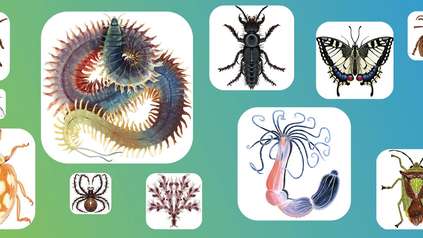
The Darwin Tree of Life Project, a collaboration including experts at the Wellcome Sanger Institute, the Natural History Museum, and many others1, aims to sequence the DNA of all findable eukaryotic organisms in the UK including animals, plants, and fungi, totalling an estimated 30,000 species.
A new report, published today (16 April) by Frontier Economics, has calculated how much this revolution in biology will benefit the UK economy through things such as improving crop resilience and pest control on farms, advances in medicine and biotechnology, and more efficient conservation projects.
This report showcases the substantial return on investment that the project offers. It highlights how the Darwin Tree of Life Project has already saved the global scientific community £55 million in research costs to date by providing over 2,500 reference genomes for open access use.
The instructions for every living thing are found in its DNA, along with its genetic story, tracking where it came from, how it evolved to adapt to new challenges, and how it might handle such changes in the future.
The Human Genome Project decoded this for humans, and in turn, revolutionised science and medicine, generating more than $750 billion in economic activity from a $4 billion investment2. The Darwin Tree of Life Project, which started in 2019, aims to do the same for all the species around us in the UK and Ireland, and contribute to the wider, global Earth BioGenome Project3.
The Frontier Economics report has identified three key areas where the economic impact will be felt:
- An estimated £800 million–£1.4 billion could be gained in UK agriculture over the next 30 years. High-quality reference genomes can be used to help find new ways to improve crop resilience, tackle invasive pests, ensure the sustainability of fish stocks, and find new ways to treat livestock diseases. For example, currently the UK’s Centre for Environment, Fisheries and Aquaculture Science uses the sole and plaice genomes to improve and inform UK fishing quotas, focusing on long-term sustainability.
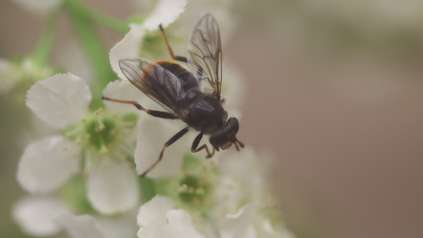
- An estimated benefit of £1.3 billion to UK ecosystem services from using the Darwin Tree of Life Project reference genomes to identify threatened species, shape management decisions, and improve the success of conservation projects. For example, the pine hoverfly genome has been used in a successful species reintroduction and captive breeding effort conducted by the Royal Zoological Society of Scotland in the Cairngorms.
- An estimated £170 million–£340 million benefit to the research and innovation sector, through direct savings and reinvestment of funding into valuable research. The Darwin Tree of Life Project will also stimulate innovation in specific technologies, including the biodiversity monitoring market, projected to reach $137 million globally by 2032. The Darwin Tree of Life Project reference genomes can also help uncover the next generation of medicines and biomaterials in the genes of species around us. For example, harnessing the genes that enable spider silk to be stronger than steel, gram-for-gram, to develop new biomaterials or understanding more about a bat’s highly efficient immune system to help inform human medicine.
Additionally, the Darwin Tree of Life Project has supplied 30 per cent of the world’s biodiversity genomes, making it a world-leader in genomic research. The project also provides open-access protocols, tools, and training to biodiversity genomics programmes worldwide, with experts advising on international projects including those in Norway, Brazil, and Australia.
“The significance of the Darwin Tree of Life Project cannot be underestimated, as demonstrated by the huge number and diversity of genomes already sequenced and by the scale of its potential economic impact in the upcoming decades. When we first began funding this ambitious project, we knew that we would unveil a rich tapestry of insights into life and nature throughout the UK & Ireland, creating remarkable scientific impact. Now, this report underscores the importance of investing in ambitious, transformative discovery research to help us better understand life around us, in turn helping us solve health challenges around the world.”
Christiane Hertz-Fowler, Head of Directed Activity at Wellcome
“Capturing the genetic secrets of complex organisms in the UK and Ireland can help us understand how life has evolved and will adapt in the future. Climate change threatens our food security, biodiversity, and ecosystems, causing environmental and economic impact. Our report shows that the Darwin Tree of Life Project reference genomes can help to offset this. The keys to some of our biggest challenges could be found in the DNA of the species we are studying. We need to invest in unlocking it to create a future where both people and planet thrive.”
Professor Ian Barnes, Research Leader at the Natural History Museum
“The Darwin Tree of Life Project is an ambitious project, and one that many of us have always believed would fundamentally change biology by decoding all life in Britain and Ireland. This report shows that our project will also have a significant beneficial financial impact over the next 30 years, highlighting how much it pays to invest in understanding and protecting biodiversity, improving conservation, and generating knowledge that benefits both people and the living world around us.”
Professor Mark Blaxter,Head of the Tree of Life Programme at the Wellcome Sanger Institute
More information
- The full list of partners are the Royal Botanic Garden, Edinburgh, CABI (Centre for Agriculture and Bioscience International), EMBL’s European Bioinformatics Institute (EMBL-EBI), Wellcome Sanger Institute, Wytham Woods, University of Oxford, University of Cambridge, Royal Botanic Gardens, Kew, the Earlham Institute, the Natural History Museum, the University of Edinburgh, the Marine Biological Association, the Zoological Society London (ZSL) and University College Dublin. There are many more collaborators who are essential to the Project, providing samples and expertise across the UK and Ireland.
- Max Gitlin, J. (2013). Calculating the Economic Impact of the Human Genome Project. [Accessed March 2026] https://www.battelle.org/docs/default-source/misc/battelle-2011-misc-economic-impact-human-genome-project.pdf
- The Darwin Tree of Life Project contributes to the Earth BioGenome Project, which goes one step further, attempting to sequence all 1.6 million species of life on Earth. More information can be found: https://www.earthbiogenome.org/
Publication:
H. Olorenshaw, J. Carvalho, D. Popov. (2026) ‘The value of reference genomes and the Darwin Tree of Life Project’. DOI: 10.5281/zenodo.19472560
Funding:
The report was funded by the Wellcome Sanger Institute’s core funding.