Jyoti Nangalia elected Fellow of the Academy of Medical Sciences
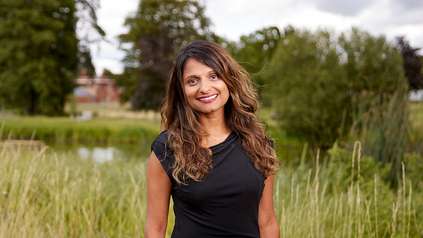
The Academy of Medical Sciences has announced the election of Wellcome Sanger Institute researcher, Dr Jyoti Nangalia as a Fellow, recognising her internationally leading work in blood cancer research and genomics.
The Academy has elected 60 exceptional biomedical and health scientists to its prestigious Fellowship.1
The latest cohort of Fellows has been recognised for their outstanding contributions to advancing medical science, through discovery research, translational work and the application of scientific knowledge in ways that deliver tangible benefits for patients and the wider public.
Jyoti Nangalia is a Group Leader at the Sanger Institute, a Clinician Scientist and a Consultant Haematologist. Her research focuses on understanding how changes in DNA acquired over a person’s lifetime can drive cancer and other diseases.
She is well known for discovering mutations in the gene calreticulin (CALR) as a major cause of certain blood cancers known as myeloproliferative neoplasms. Testing for CALR mutations is now routinely used in clinical practise worldwide and is recommended by the World Health Organisation. Clinical trials exploring new therapies that target CALR are showing promising early results.
Dr Nangalia’s research has transformed understanding of how blood cancers develop and evolve over time. Her group has uncovered how some mutations that drive cancers occur very early in life, even before birth, to cause disease many decades later.2 In contrast, other mutations trigger rapid cancer growth, with important implications for earlier diagnosis and prevention.3 Her team is also defining how other changes in the genome, such as methylation marks, change over the human lifespan and in disease.
In a recent study, Jyoti’s group tracked how blood cancers develop over time, uncovering key genetic differences between patients whose disease remains stable versus those whose condition progresses.4 The findings provide new insights into the biology of blood cancer evolution and could help inform future approaches to diagnosis, monitoring and treatment.
“I am honoured to be elected as a Fellow of the Academy of Medical Sciences and proud to be recognised alongside so many outstanding researchers. Our research aims to better understand how changes in our DNA contribute to cancer and disease, with the goal of improving diagnosis, treatment and outcomes for patients. I look forward to continuing this work with colleagues at the Sanger Institute and collaborators across the field.”
Dr Jyoti Nangalia, Group Leader at the Wellcome Sanger Institute
“It is a privilege to welcome this outstanding new cohort to the Fellowship of the Academy of Medical Sciences. Each of our new Fellows has been recognised by their peers for exceptional achievement for the influence their work has had in advancing medical science and improving health. The diversity of disciplines represented this year reflects the richness of modern medical science and the value of collaboration across fields. At a time when health challenges are increasingly complex, the Academy’s Fellowship provides a trusted, independent platform for scientific leaders to work together, champion excellence, and help ensure research delivers real benefits for people and communities.”
Professor Andrew Morris CBE FRSE PMedSci, President of the Academy of Medical Sciences
More information
Notes
- This year’s cohort reflects the Academy’s continued focus on evolving its Fellowship to be diverse, relevant and representative of the biomedical and health research community.
- Of the 60 new Fellows elected in 2026, 42 per cent are women – 25 Fellows. This is the highest proportion ever elected in a single year. The new Fellows are drawn from 28 institutions and represent eight nationalities, with representation from across the UK.
- The new intake spans a wide range of sectors, disciplines and research pathways. It includes five new Fellows elected from industry, alongside recognition of expertise in traditionally under‑represented areas such as speech and language therapy, medical ethics, traumatic brain injury and the application of artificial intelligence in healthcare.
- The Fellows elected this year join an esteemed Fellowship of over 1,500 researchers who are at the heart of the Academy’s work to nurture scientific talent and shape research and health policy in the UK and worldwide.
- The new Fellows will be formally admitted to the Academy at a ceremony on Tuesday 30 June 2026.
- Williams et al. (2022). ‘Life histories of myeloproliferative neoplasms inferred from phylogenies’. Nature. DOI: 1038/s41586-021-04312-6
- Kamizela et al. (2025). ‘Timing and trajectory of BCR::ABL1-driven chronic myeloid leukaemia’ Nature. DOI: 1038/s41586-025-08817-2
- Leongamornlertet al. (2026) ‘Genomic evolution and natural history of myeloproliferative neoplasms on therapy.’ Cancer Discovery. DOI: 1158/2159-8290.CD-26-0410