A day in the life of a Senior Bioinformatics Software Developer at Sanger Institute
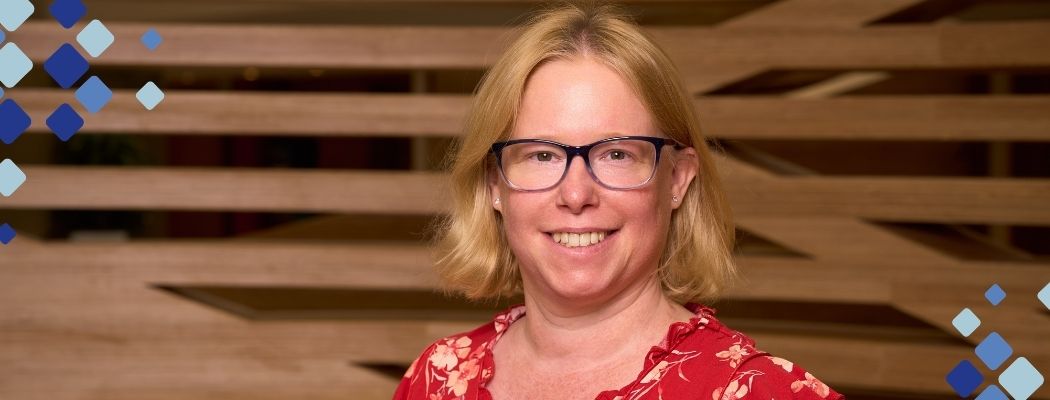
Creative, collaborative and analytical- that’s how Rebecca Shepherd describes her role as a Senior Bioinformatics Software Developer at the Wellcome Sanger Institute. Working in the Garnett group, Rebecca plays a key role in developing and maintaining tools and platforms that support cutting-edge cancer research. Her work spans everything from building and updating websites like the Cell Model Passports and Sanger DepMap, to processing complex biological data and making it accessible to scientists around the world.
“I also help with IT requirements for the lab,” she explains, highlighting the variety and hands-on nature of her role.
From molecular biology to software development
Rebecca’s career path into software development wasn’t a traditional one. “After leaving university, where I studied Molecular Biology, I wasn’t sure what I wanted to do,” she says. “I signed up with a science recruitment agency and got a temporary role in an IT department at GSK. I really enjoyed it, so I decided to continue down that route.”
Her journey to the Sanger Institute began with an opportunity that combined both worlds: “I spotted an advert for a trainee in IT for the Cancer Genome Project (CGP). It was perfect for me as I didn’t have any coding experience at the time and wanted to learn. The CGP hadn’t been running long, so it was exciting to be involved in something new.”
Nearly 25 years later, Rebecca is still at Sanger Institute, something she attributes to the people, the science, and the opportunities.
What does a typical day look like?
No two days are exactly the same, but Rebecca’s work often starts with making sure everything is running smoothly. “I check that the websites are all working and look for any tickets from the lab and anything that needs fixing or running so scientists can do their work.” From there, her day might involve:
- Writing new code or updating existing systems
- Processing and preparing data for public release
- Running or developing Nextflow pipelines to analyse data
- Updating websites with new datasets or features
It’s a role that blends technical expertise with real-world scientific impact.
Supporting global research
Rebecca is currently working on making data available through the Cell Model Passports website to support the publication of an organoid research paper, alongside updates to the platform and integrating older datasets.
“The data we make available through our websites is widely used by the global research community,” she explains. “There were over 48,000 visits to Cell Model Passports last year from all over the world.” This data is helping researchers develop more effective, targeted treatments for patients, with fewer side effects.
A collaborative and creative role
Rebecca works closely with both scientists and fellow developers. “It’s very collaborative and uses a lot of creativity,” she says. It’s something that often surprises people about software development in a research environment.
Her toolkit includes technologies such as Python, React, Nextflow, Docker, and Git, but just as important are problem-solving skills and communication.
Challenges and rewards
Like any technical role, there are challenges. “The most challenging part is when things break,” Rebecca says. “I’m responsible for our public-facing websites, so I need to make sure they are up and running.”
But for Rebecca, that challenge is also part of the appeal. “I love problem solving, so it’s very satisfying when there is a difficult problem and I come up with a solution.” And beyond the technical side, it’s the impact that matters most: “Working in cancer, I love seeing how what we do is helping people.”
Growing your career at Sanger Institute
Rebecca’s career has evolved significantly during her time at Sanger Institute, supported by continuous learning opportunities. “Not long after I started, I completed my Masters in Bioinformatics,” she says. “There are always opportunities to learn new skills, as technology is changing all the time.”
She has also taken part in leadership and development programmes, including the Herschel Programme, and completed training in project management, public engagement and presentation skills. “I’ve also been coached through the internal coaching and mentoring scheme, which was a very positive experience.”
Beyond the day job
One of the things Rebecca values most about Sanger Institute is the opportunity to get involved beyond her core role. “I’ve done quite a bit of public engagement with schools over the past year, which I love. It’s great to show girls that a career in software development can be for them.” She is also an internal coach and mentor, and an active member of the Disability Network, helping to raise awareness and support colleagues. “There are also lots of social activities,” she adds. “My team has a social committee, and the Somatic Genomics Programme runs regular events.”
Championing technical careers
Rebecca is also Chair of the Engagement Working Group for the Technician Commitment, an initiative that supports and recognises technical staff across the institute. “At Sanger Institute, over half of all staff are represented by the Technician Commitment,” she explains, spanning roles from technicians and research assistants to software developers and data scientists.
Through six working groups, the initiative:
- Organises events and networking opportunities
- Supports professional registration and mentoring
- Delivers skills development sessions
- Raises visibility and recognition of technical roles
As Chair, Rebecca has been leading efforts to better understand and improve engagement across the institute. “I’ve really enjoyed working with people from across Sanger Institute and developing new skills,” she says.
Why consider a technical career at Sanger Institute?
For Rebecca, the answer is simple: “There are always interesting projects to work on, as well as a lot of development opportunities both personal and technical.” With initiatives like the Technician Commitment, coaching and mentoring, and access to world-leading science, Sanger Institute offers an environment where technical professionals can thrive.
The best thing about working at Sanger Institute?
“I’ve met a lot of lovely people over the years, and there are always interesting scientific projects to work on,” Rebecca says. For anyone considering a career in bioinformatics or software development, her story offers a great insight into the impact and variety of a technical career at Sanger Institute.