Genomics uncovers new ways to target chronic childhood disease
A team at the Wellcome Sanger Institute, the Fundació Lluita contra les Infeccions, Barcelona, the London School of Hygiene & Tropical Medicine, and their collaborators, compared the impact of repeated mass treatment with targeted treatment on Treponema pallidum subspecies pertenue, the bacterium that causes yaws.
In a new study, published today (6 January) in The Lancet Microbe, researchers analysed bacterial genomes from a previous clinical trial to find out why yaws returned after a course of successful, repeated treatment, and therefore work out better strategies to eradicate it.
They found that yaws does not spread far geographically and that school-age children may be more likely to transmit the bacteria to one another, suggesting that public health interventions could target children of this age. Another main finding was that the rise in yaws at the end of the study was likely due to spread by those without symptoms, and this is necessary to consider when developing interventions with the community.
Yaws is a chronic childhood infectious disease, with 75 to 80 per cent of people affected being children under 15 years of age1. It causes ulcers on the skin and can affect the cartilage and bone, causing disfiguration. It is spread through skin-on-skin contact1. Yaws is known to be endemic in 15 countries, and the disease is found primarily in communities in warm, humid and tropical forest areas of Africa, Asia, Latin America and the Pacific1.
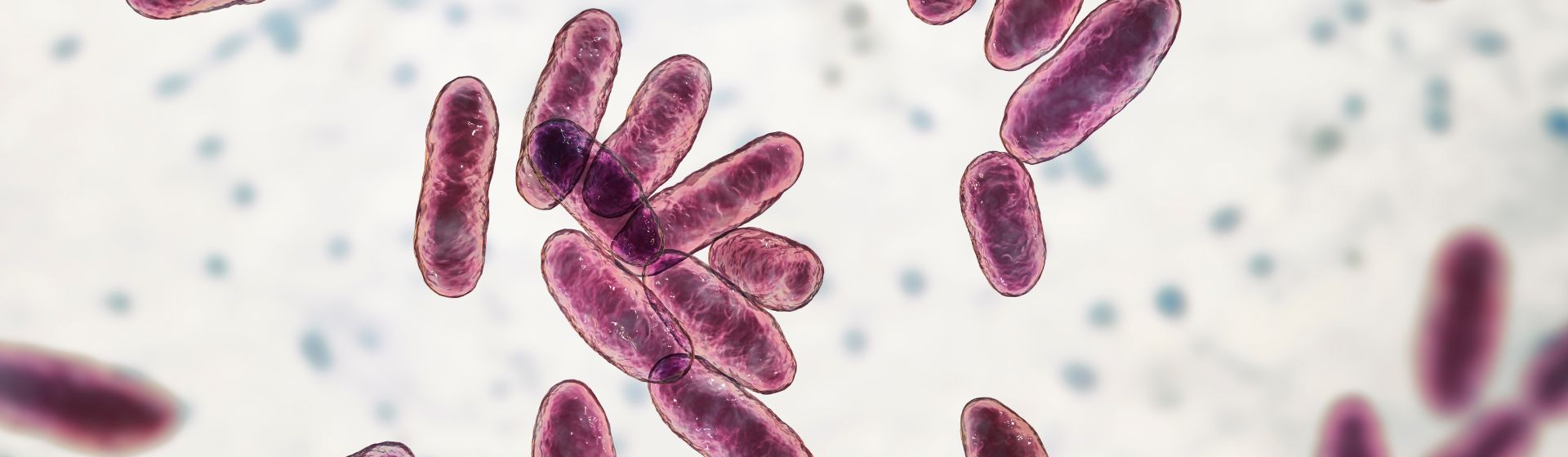
Treponema pallidum subspecies pertenue (T. pallidum pertenue or TPE) is the bacterium that causes yaws and is closely related to the bacterium that causes syphilis. The bacteria can be treated with antibiotics. However, because the bacteria can lie dormant in the body and some people are asymptomatic carriers, it can be difficult to capture the full picture of yaws within an area.
In this new study, researchers analysed 222 bacterial genomes from a previous study comparing repeated mass drug administration using the antibiotic azithromycin with one round of mass drug administration followed by targeted treatment in Papua New Guinea2. One of the resistant bacterial strains caused longer-lasting ulcers and hindered the immune response in patients. This study was the first time that genetic mutations associated with differences in immune responses or symptoms have been identified.
They found that almost all of the yaws samples at the end of the trial, when cases started rising again, were very closely related to samples from the beginning. Additionally, people who lived closer together were more likely to share closely related yaws strains, suggesting that the bacteria cannot transmit very far. The team also highlighted that older children were more likely to share closely related yaws strains than younger children. Therefore, public health interventions focusing on children of this age might be effective at stopping the spread of yaws.
Overall, this study suggests that yaws cases started rising because of strains already in the community, compared to importation from elsewhere and that while antibiotic treatment is effective, this must be closely monitored due to the rise of resistant strains.
“Genomics has allowed us to see that the yaws strains that were found at the end of the trial are closely related to those seen at the beginning, suggesting that they reemerged after treatment was stopped. By taking a closer look at the genomes of the bacteria causing yaws, our study suggests that public health interventions that target older children and consider asymptomatic people within the community could help stop the disease from coming back.”
Dr Amber Barton, first author at the Wellcome Sanger Institute
“This study shows how genomic analyses are critical for informing public health decision-making for yaws eradication, revealing highly local transmission patterns, age groups driving spread, and the true impact of interventions. We show that repeated mass drug administration does more than reduce yaws cases — it sharply reduces the genetic diversity of the bacterium, bringing elimination closer. At the same time, genomic surveillance allows us to identify and track strains that are harder to eliminate.”
Professor Oriol Mitjà, co-senior author at the Fundació Lluita contra les Infeccions, Barcelona
“Collectively, people have been trying to eradicate yaws for over 70 years. Our study suggests that repeated antibiotic treatment could be part of the solution to stopping this disease, but it also highlights that antibiotic resistance is a real and present threat which can evolve at any time.”
Dr Mathew Beale, co-senior author at the Wellcome Sanger Institute
More information
- World Health Organization. Available at https://www.who.int/news-room/fact-sheets/detail/yaws [accessed December 2025]
- The researchers conducted a retrospective genomic epidemiology study on samples collected during a cluster-randomised trial in the Namatanai District of the New Ireland Province of Papua New Guinea, from April 2018 to October 2019. More information on this trial can be found: John LN, Beiras CG, Houinei W, et al. (2022) ‘Trial of Three Rounds of Mass Azithromycin Administration for Yaws Eradication’. N Engl J Med. DOI: 1056/NEJMoa2109449.
Publication:
A. Barton, P. Pospíšilová, C. Beiras, et al. (2026) ‘The Effect of Repeated Mass Drug Administration on the Transmission of Yaws: A Genomic Epidemiology Study’. Lancet Microbe. DOI: 10.1016/j.lanmic.2025.101229
Funding:
This research was part-funded by the European Research Council, European Union, Provincial Deputation of Barcelona, Barberà Solidaria Foundation and Wellcome. A full acknowledgement list can be found in the publication.