

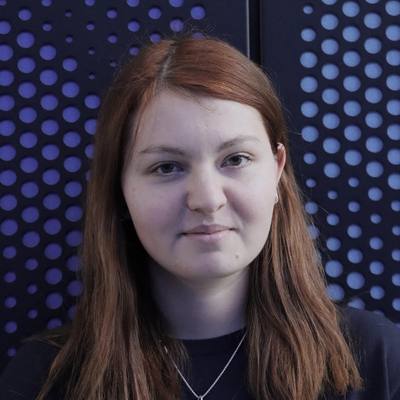
Dr Teodora Mateeva
Senior Bioinformatician
My research
Many bacteria have an extracellular structure positioned outside of the peptidoglycan cell envelope, commonly referred to as a capsule. Bacterial capsules can have a complex and varying composition being made of: polysaccharides, polypeptides, combinations of polysaccharides and polypeptides, poly-γ-D-glutamic acid, hyaluronic acid and others. Capsules are synthesized in both Gram-positive and Gram-negative bacteria, and the composition is determined largely by the synthesis pathway. Due to the importance of the capsule as a virulence factor, it has gained a lot of attention in the field of vaccination. However, there is little in-depth research of the capsule diversity across all species, particularly the capsule diversity in non-pathogenic bacteria. In my work, I perform large-scale analysis of the diversity of proteins taking part in different capsule synthesis pathways. I apply and develop ML-based and physics-based methods to learn more about the molecular evolution of the capsule machinery across different bacterial species. I am also interested in specific cases where mutations affect protein function and implicate capsule synthesis.
My timeline
Senior Bioinformatician, Wellcome Sanger Institute
Computational Biologist, Baseimmune
PhD Student (2019-2024), Computational Biochemistry, Department of Physics, King's College London | Bioinformatics Institute (BII), A*STAR Singapore
Research Assistant, Department of Chemistry, King's College London
R&D Chemistry Intern, SensorHut
MRes Bioimaging Sciences, Imperial College London
BSc Chemistry, University of Glasgow