

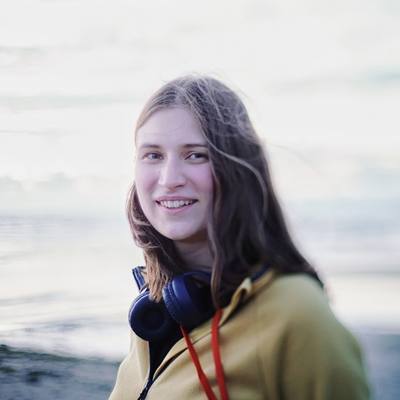
I am currently rotating in Dr Joana Meier’s group, where I am establishing a protocol for single cell butterfly sperm sequencing.
Neotropical Ithomiini butterflies are among several Lepidoptera groups showing extreme variation in chromosome number, which ranges from 5 to 120 across species and can differ even within the same population. Chromosomal rearrangements (fusions and fissions) and large-scale structural variants can contribute to the establishment of reproductive barriers due to meiotic chromosome mispairing or accumulation of incompatibilities via suppressed recombination, thereby influencing global and local recombination landscape. At the same time, rearrangements themselves can arise from ectopic homologous recombination. Despite the mutual importance of recombination and chromosomal rearrangements, these processes have rarely been studied together, particularly in species with holocentric chromosomes. To obtain direct estimates of meiotic recombination and chromosomal rearrangement in sperm, I am developing a protocol for material preparation from flash frozen spermatophores followed by single cell DNA and bulk HiC sequencing.
I am broadly interested in using population genomics approaches to study evolutionary processes such as adaptation and speciation, including their interplay with introgression; population history inference; and genomic basis of variation and gene expression regulation. In my day-to-day, I do a lot of large-scale data processing, workflow construction using bash and Nextflow, and data analysis in R.
Past projects
My past projects-span a broad range of topics, however, most of them can be unified by the theme of using large-scale genomic data. I previously worked with metagenome assembled genomes, where I used pangenomic graphs to improve the quality of the data; contributed a module to the viral identification pipeline for pathogen surveillance; and carried out genome assembly and annotation to study insecticide resistance in aphids. From my most recent projects, I inferred archaic human introgression in traditional Indonesian populations, assessing the method suitability for ultra-low coverage imputed data, and looked at genomic rearrangements and functional adaptation to telomere shortening in yeast mutants. I worked with both short- and long-read sequencing data and have always try to achieve reproducible workflows, incorporating Nextflow and github into the process wherever possible and reasonable.
My timeline
Rotation project in Dr Joana Meier's group. Butterfly single cell sperm sequencing
Rotation project in Dr Mara Lawniczak's group. Pangenome of major malaria mosquito vectors Anopheles gambiae and Anopheles coluzzi
PhD student at the Wellcome Sanger Institute
BSc (Honours) in Genetics at the University of Edinburgh, 1st
Honours project in Dr Alena Shkumatava's group, University of Edinburgh. Functional characterisation of bifuctional RNA Megamind
Internship in Prof. Irene Gallego Romero's group, SVI, Melbourne. Archaic introgression inference in low-coverage imputed genomes from Indonesia
Internship in Prof. Andrew Rambaut's group, University of Edinburgh. Unknown RNA virus classification in metatranscriptomic data (mSCAPE project)
Transferred to the University of Edinburgh
Internship in Prof. Peer Bork's (in memoriam) group, EMBL, Heidelberg. Completeness improvement of metagenome assembled genomes using pangenomic graphs
Studying Biotechnology at the Belarusian State University