

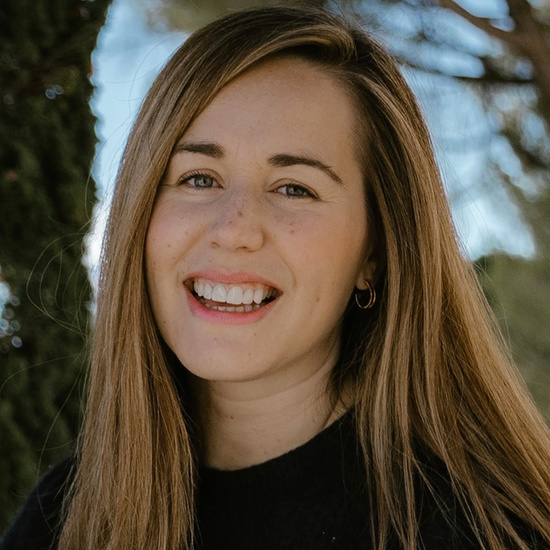
Biography
She has long been interested in how much biology we can learn from genetic and transcriptomic data, and how to turn that into an understanding of phenotype. She has been exploring this question in the female reproductive system in the Vento Lab since 2019, integrating complementary approaches, including single-cell and spatial genomics. Her aim is to understand how these organs form and function, how the cellular microenvironment directs the identity of their cells, and how these processes break down in gynaecological conditions. Ultimately, the Vento Lab uses this knowledge to guide the design of faithful in vitro models for studying disease.
Over the past years, Luz has led the assembly of the first version of the Human Female Reproductive System Cell Atlas (Cohen et al., 2026). This brings together a series of foundational studies and years of work characterising the female reproductive system tissue by tissue, across development and the menstrual cycle, using single-cell and spatial genomics (Garcia-Alonso et al., 2021; Garcia-Alonso et al., 2022; Marečková et al., 2024; Lorenzi et al., 2025; Garcia-Alonso et al., 2026; Lorenzi et al., 2026). Her work has uncovered novel cell types in these tissues (including tissue progenitors) and their mechanisms of action (including the spatial regionalisation of tissues that enables specialised functions) that are foundational to understanding the physiology of the ovaries and uterus, with direct implications for highly prevalent gynaecological conditions and women’s general health.
This focus builds on Luz’s earlier work linking genotype to phenotype. During her PhD, she studied resilience to genetic population variation through protein signalling, uncovering the mechanisms by which mutations act in cancers (Garcia-Alonso et al., 2014; Porta-Pardo et al., 2015; Dopazo et al., 2016). Her postdoctoral research at Saez-Rodriguez lab at EBI then turned to transcriptomics, asking how much mechanistic insight could be drawn from gene expression data, work that produced DoRothEA (Garcia-Alonso et al., 2018; Garcia-Alonso et al., 2019), a widely used framework for inferring transcription factor activity. She now continues to contribute computational tools to the single-cell community, including methods for inferring cell-cell communication from single-cell and spatial data (Garcia-Alonso et al., 2021; Garcia-Alonso et al., 2022; Troulé et al., 2024).
Together, this sustained focus on reading mechanism from genetic and transcriptomic data continues to shape how she approaches the study of the female reproductive system.
My timeline
Bioinformatics Lead (WSI, Cambridge, UK), Roser Vento's research group
Principal Bioinformatician (WSI, Cambridge, UK), Roser Vento's research group
post-doc (EBI, Cambridge, UK), JulioSaez-Rodriguez research group
phD student (Valencia, Spain), Joaquin Dopazo research group
PFIS Predoctoral Fellowship (Spain)