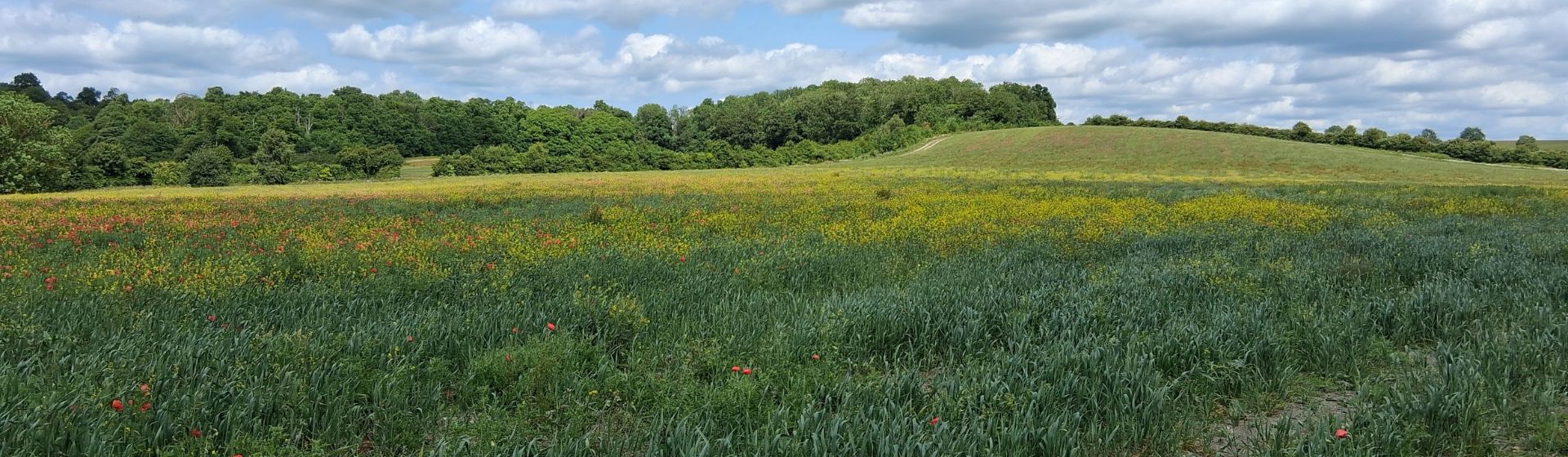
Wimpole Estate buzzes with life as Sanger scientists help record over 5,000 species
Since the estate was acquired by the National Trust 50 years ago in 1976, Wimpole has evolved into a thriving mosaic of habitats: from species-rich chalk grassland and veteran trees to organic farmland, hedgerows, ponds and woodlands. Now, thanks to DNA barcoding by scientists at the Sanger Institute, this rich biodiversity is contributing to a national reference library of insects as part of the UK BIOSCAN project, supporting international efforts to document biodiversity.
The BIOSCAN project is a UK-wide collaboration that is studying the genetic diversity of one million flying insects. Insects from 100 sites are actively being collected monthly and then analysed at Sanger using DNA barcoding. This is a genomic identification technique which uses a short section of DNA to identify a species.
The resulting sequence data will provide a baseline characterisation of insect species diversity over space and time and form a much-needed resource for DNA-based biomonitoring in the UK.
Analysing the DNA of wildlife has uncovered new medicines and technologies as well as boosted economic development1. Rangers caring for Wimpole’s special landscapes and habitats join a community of scientists, citizens and rangers across the UK and beyond, helping to uncover new species and document ecosystems. The work comes at a critical time as world temperatures increase and species diversity continues to decline.
Among Wimpole’s most remarkable residents are the rare barbastelle bats, whose presence have earned the estate’s woodlands both Site of Special Scientific Interest and Special Area of Conservation status. In spring, great crested newts breed in South Park’s ponds, while the estate’s veteran trees harbour the endangered rusty red click beetle. A tiny pygmy ant — recorded at only one other UK site — has also been discovered here.
The farmland, managed organically and free from pesticides, plays a vital role. Corn buntings, a species that has declined sharply nationwide due to agricultural intensification, continue to breed in Wimpole’s fields. In total, Wimpole is home to ten species of bumblebee and notable butterflies including marbled white, silver-washed fritillary and white-letter hairstreak. Three newly recorded dragonfly species reflect the influence of a warming climate, while rare beetles, flies and even an uncommon mayfly add to the estate’s ecological importance. The site is also one of the best National Trust properties nationally for aphids and plant hoppers, a crucial foundation of the food chain. Wimpole also boasts 330 species of wildflower. This rich ecosystem is a haven for those with a special interest in wildlife and ecology, providing new experiences for visitors.
“Recording more than 5,000 species is remarkable in any landscape, but particularly here in Cambridgeshire, where wildlife is facing the combined pressures of habitat loss and increasingly hot, dry conditions. But it isn’t just about reaching a number. What makes Wimpole special is the abundance of wildlife people can experience here. In some areas of the estate during the summer, visitors can see thousands of butterflies over the course of a short walk. That richness of life is all the more encouraging because Wimpole is a working estate, producing food and welcoming visitors as well as caring for wildlife. It reflects five decades of careful stewardship and shows that nature can flourish alongside farming, public access and heritage conservation. By managing the estate with nature in mind, we can provide wildlife with the food, shelter and range of habitats it needs, from soil invertebrates right through to top predators such as barn owls and marsh harriers.”
David Hassall, Farm and Countryside Manager for Wimpole Estate
“UK BIOSCAN is an ambitious DNA-based survey of the UK’s flying insects, laying the foundations for large-scale, long-term biomonitoring of flying insect life. Insects are easy to overlook, but they’re the hidden engine of every ecosystem. DNA barcoding doesn’t just help us count them; it’s uncovering entirely new species and even whole groups that have gone undetected and undescribed until now. Sites like Wimpole, with their long-term, pesticide-free management, are valuable places to sample from as their insect communities add real depth to the national picture we’re building and help us understand how land management shapes insect life across the UK.”
Dr Lyndall Pereira da Conceicoa, BIOSCAN Science Lead at the Wellcome Sanger Institute
Diving deeper into some of Wimpole’s wonderful wildlife: Top 5 special species
Barbastelle bat: One of Britain’s rarest bats, the barbastelle is so sensitive to disturbance that its presence has helped earn Wimpole’s woodlands international protection status. With its distinctive pug-like face and stealthy woodland hunting style, this elusive species is a true flagship for ancient trees and dark night skies.
Great crested newt: The UK’s largest native newt, the great crested newt returns each spring to breed in Wimpole’s ponds, performing elaborate underwater courtship displays. Protected by law and a key indicator of healthy wetlands, their presence signals clean water and well-managed surrounding habitat.
Corn bunting: Known as the “jangling keys” bird for its distinctive song, the corn bunting has vanished from much of the English countryside due to intensive agriculture. At Wimpole, pesticide-free fields and wildlife-friendly margins provide the seeds and insects it needs to keep breeding — a rare good-news story for farmland birds.
Rusty red click beetle: Once thought close to extinction in Britain, this striking beetle depends on the decaying wood of ancient veteran trees. Its discovery at Wimpole highlights the importance of retaining old, hollowing trees, proving that sometimes conservation means letting nature grow old gracefully.
Venus’s-looking-glass: This delicate, violet-blue arable flower was once a familiar sight in cornfields but is now a rarity in modern agriculture. Flourishing in Wimpole’s organic fields, its star-shaped blooms are a reminder of how traditional, chemical-free farming can bring back the wildflowers of the past.
More information
- More information about the BIOSCAN “International Barcode of Life” project can be found here: https://ibol.org/bioscan/, which describes how DNA barcoding supports biodiversity monitoring with applications in economic, policy and regulatory contexts. In the UK, the project is being led by Dr Mara Lawniczak’s group at the Wellcome Sanger Institute and more information can be found here: https://bioscan.tol.sanger.ac.uk