Sanger scientists to receive major grants from the European Research Council
Wellcome Sanger Institute researchers, Dr David Adams and Professor Jukka Corander have been awarded prestigious European Research Council (ERC) Advanced Grants to support ambitious research into rare genetic diseases and the evolution of bacteria, respectively.
ERC Advanced Grants give senior researchers the opportunity to pursue ambitious, curiosity-driven projects that could lead to major scientific breakthroughs. The grants are part of the EU’s Horizon Europe programme, and the total funding — worth €838 million — will go to 319 leading researchers across Europe.1
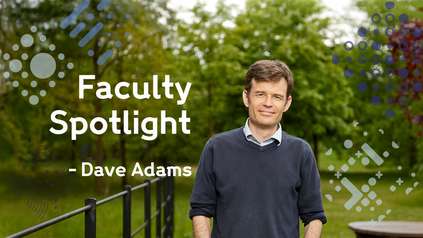
David Adams has been awarded a €2.5 million ERC Advanced Grant for “REBALANCE”,2 a five-year project focused on rare conditions known as telomeropathies. These conditions are caused by faults in telomeres — the protective caps at the ends of chromosomes that help keep them stable and protect chromosome ends from damage. Telomeropathies are not just one disease but a spectrum of related genetic conditions that can affect many organs.
David and his team will investigate how cells can naturally compensate for telomere damage and identify the genetic changes that may help restore normal cell function. By uncovering the biological mechanisms behind these disorders and distinguishing harmful genetic changes from harmless ones, the research could open new routes to treatment for patients impacted by telomere diseases. The findings may also improve understanding of fundamental processes involved in ageing and cancer.
“Many patients with telomere disorders have very limited treatment options. This grant gives us the resources to understand the natural mechanisms that allow some cells to compensate for telomere damage – and to ask whether we can therapeutically exploit those same pathways. It’s the kind of question you need time and scale to answer properly, and that’s exactly what an ERC Advanced Grant provides.”
Dr David Adams, Head of the Somatic Genomics Programme at the Wellcome Sanger Institute
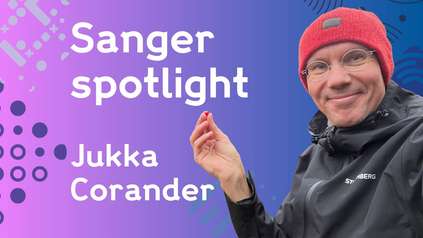
Jukka Corander, who is based at the University of Oslo, Norway and is Associate Faculty at the Sanger Institute, has received a €2.5 million ERC Advanced Grant for ACES,3 which is his third ERC grant. Jukka and his team will explore how populations of Escherichia coli (E. coli) — one of the world’s most important bacteria — compete, persist and evolve in the human gut.
Although E. coli has been studied extensively in laboratories, scientists still know surprisingly little about how natural bacterial populations behave inside people. Using DNA sequencing, natural and in vivo lab experiments, combined with advanced simulation models, ACES will investigate the genetic factors that help certain strains thrive. The research aims to reveal the hidden rules that shape bacterial communities and drive their evolution. The findings could have implications for understanding bacterial infections and antibiotic resistance, helping researchers predict how bacterial populations respond to interventions such as antibiotics, probiotics and vaccines.
“Despite decades of research, we still have much to learn about how E. coli populations thrive and evolve in the human gut. By combining cutting-edge sequencing with new analytical approaches, the ERC Advanced Grant will allow us to uncover fundamental principles of bacterial evolution that could help tackle antibiotic resistance in the future.”
Professor Jukka Corander, Associate Faculty at the Wellcome Sanger Institute and Professor at the Institute of Basic Medical Sciences, University of Oslo
“The new Advanced Grant projects demonstrate the creativity, ambition, and intellectual boldness that frontier research requires. The ERC’s role is to support researchers who are asking difficult scientific questions and want to venture into unexplored territory in pursuit of new knowledge. Congratulations to all our new grantees. They are of 33 different nationalities – testament to Europe’s strength as a destination for outstanding scientific talent, regardless of origin. We need to step up investment for Europe to lead in science and innovation.”
Professor Maria Leptin, President of the European Research Council
More information
Notes to Editors:
- The new grantees will be based at universities and research centres in 24 EU Member States and associated countries, notably in the UK (62 grants), Germany (46), Switzerland (32), Spain (29), and France (26). Among the winners are 52 Germans, 45 Britons and 29 Italians, as well as researchers of 30 other nationalities.
- Project title: Uncovering Genetic Rescue and Functional Rebalancing in Telomeropathies Through Genome Editing and High-Resolution Screening
- Project title: Augmented control of ecological and evolutionary success in bacterial populations