One of cholera’s great enemies is found in the human gut
Experts at the Wellcome Sanger Institute, icddr,b (International Centre for Diarrhoeal Disease Research, Bangladesh), the Post Graduate Institute of Medical Education & Research (PGIMER), and their collaborators, found that in the Ganges Delta, cholera bacteria rapidly gain and lose special armour that protects against attacks from the virus, known as bacteriophage ICP1.
The new research, published today (1 April) in Nature, highlighted that maintaining these anti-viral defences leads to lower disease severity of cholera in humans and reduced ability to spread outside the country for this bacterial strain.
By looking at the ecology of cholera in South Asia, this study challenges the long-held belief that the Ganges Delta is the global source of cholera. Knowing more about the strains and the factors that influence the spread of cholera bacteria in different regions could help provide an early warning system, identifying high-risk strains before they escalate and allowing for early intervention.
It could also help develop new treatments, for example, research into whether the virus could be harnessed to help stop cholera in the future.
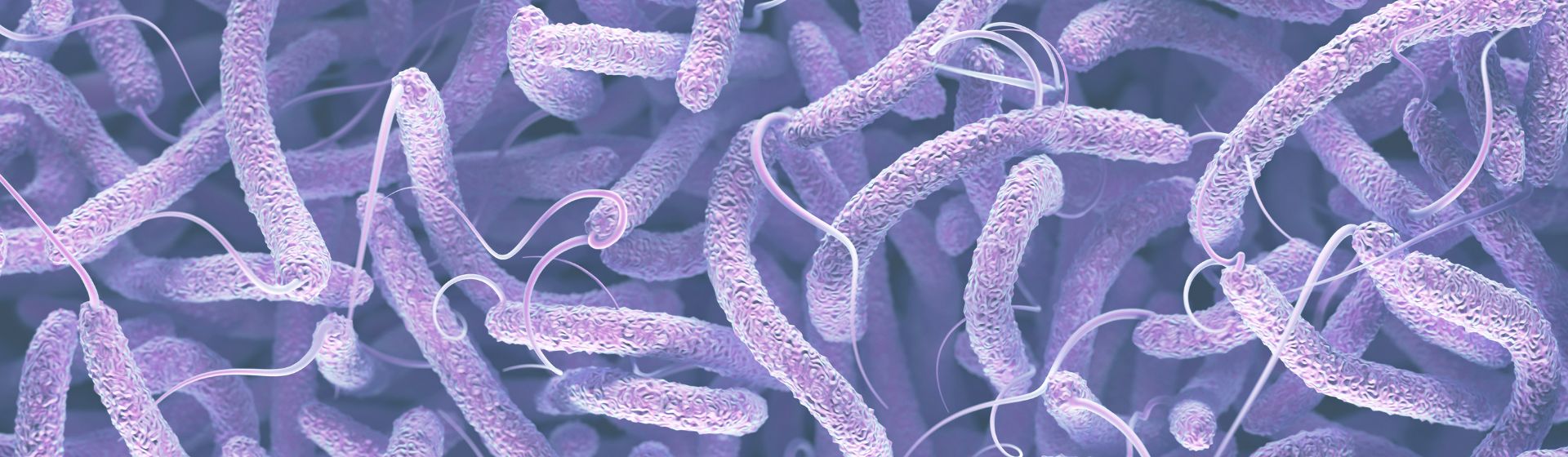
Cholera is an acute diarrheal infection, which can be fatal within hours if untreated. It is caused by the bacterium, Vibrio cholerae (V. cholerae), which spreads through contaminated food and water1. Globally, we are in the seventh cholera pandemic, which started in 1961, with an estimated 1.3 to 4 million cases and up to 143,000 deaths per year from the condition worldwide1. It has been shown that the seventh pandemic is caused by V. cholerae strain 7PET O1, originating from the Bay of Bengal, which borders Bangladesh and India, and it was thought that the Ganges Delta was the global source of cholera.
This new research sequenced bacterial samples from across Bangladesh and North India, creating the most comprehensive dataset of cholera in this area to date, containing over 2,300 genomes collected across approximately 20 years. They found that it was the Ganges Basin, not the Ganges Delta, that was the primary global source of cholera in that time.
By tracking the bacterial spread, they also uncovered that the bacteria do not simply follow the flow of rivers. Instead, they tend to stay within national borders, suggesting that human travel and population density are more important for cholera transmission than the natural environment.
They also found V. cholerae in Bangladesh, strain 7PET O1, rapidly gain and lose genetic elements known as defence systems, which act like armour helping them survive against their viral nemesis, the bacteriophage ICP1. Bacteriophages, also known as phages, are natural viruses that attack bacteria. They need bacteria to replicate, are generally not harmful to human cells, can rapidly kill their bacterial host, and are often found in the human gut microbiome.
By analysing cholera data in South Asia spanning 20 years, the team found evidence that the bacteria are constantly fighting off attacks from ICP1 using different armour or shields. In turn, the study shows that the ICP1 virus develops its own ‘anti-defence’ weapons to hack through those shields and continue its attack. While it has been shown previously that the presence of ICP1 in the gut is linked with less severe disease2, as the virus kills off the disease-causing bacteria2, this study shows that there is an evolutionary arms race in Bangladesh between the bacteria and ICP1, with each species developing new ways to defeat the other. This compromises the bacteria’s ability to spread out of the country, limiting its ability to spread globally.
In the future, it may be possible to use our understanding of this arms race to develop new treatments or control strategies for cholera.
The study suggests that a better understanding of the natural ecology of this important disease could lead to early warning systems, highlighting V. cholerae bacteria that have lost new types of defensive shields and are more likely to cause severe disease and spread globally to cause epidemics. By identifying these high-risk strains before they spread, authorities could update treatment recommendations, deploy vaccines and improve water sanitation in specific areas to prevent local outbreaks from turning into global pandemics. Overall, by taking an ecological view of the global source of cholera, it is possible to stop the spread of these disease-causing bacteria to other parts of the world.
“Our research uncovered the evolutionary struggle between cholera bacteria in Bangladesh, and the bacteriophage that preys on them. Specifically, the discovery of rapid loss and gain of V. cholerae’s protective defences and their impact on disease severity is key to understanding the factors involved in the spread of this bacterium. Without the defences, the bacteria are more dangerous to humans, and tracking this in real time, through genomics, can help us identify when the strains pose the highest risk and intervene early. Additionally, future research into cholera and microbiome interactions in other regions of the world could reveal other phages that prey on the bacteria, which may help develop new treatments in the future.”
Dr Amber Barton, co-first author at the Wellcome Sanger Institute
“By creating the most comprehensive genetic database of cholera bacteria samples across Bangladesh and North India, our study has shown that our understanding of the global source of cholera needs updating and refinement to consider a region that spans Bangladesh and India. We can also see that cholera spread does not follow the rivers and waterways. This suggests that, despite cholera being a water-borne pathogen, the role of human travel and population density are bigger factors in cholera transmission than the surrounding environment. Understanding this can help inform public health interventions to help stop the spread of infections.”
Dr Firdausi Qadri, co-senior author at the icddr,b in Bangladesh
“The world is in its seventh global pandemic of cholera, with the bacteria evolving and adapting to treatments and the world around it. By taking an ecological view of cholera across whole regions of the world using genomics, we have been able to dispel previous inaccuracies about the global spread of the pandemic and provide a clearer picture of the factors and threats these bacteria face. This can help inform public health strategies and future treatments to hopefully end this pandemic and protect the many thousands of people impacted.”
Professor Nick Thomson, co-senior author at the Wellcome Sanger Institute
More information
- World Health Organization. Available at https://www.who.int/news-room/fact-sheets/detail/cholera [accessed March 2026]
- Madi, et al. (2024) ‘Phage predation, disease severity, and pathogen genetic diversity in cholera patients.’ Science. DOI:10.1126/science.adj3166
Publication:
A. Barton, M. H. Afrad, A. Taylor-Brown, et al. (2026) ‘Evolution of Pandemic Cholera at its Global Source’. Nature. DOI: 10.1038/s41586-026-10340-x
Funding:
This research was part-funded by the Bill and Melinda Gates Foundation and Wellcome.