New biobank of tumour models reveals cancers' weak spots
A new open resource of patient-derived cancer models has enabled researchers to create the first large-scale map of the genes that cancers rely on to survive, offering new routes for research into better and less toxic treatments for patients.
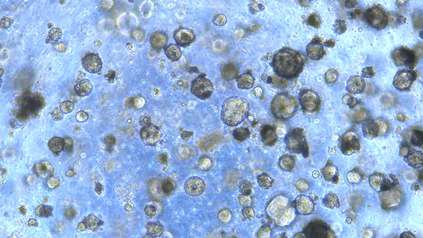
Published today (5 August) in Nature, researchers from the Wellcome Sanger Institute, and their collaborators across five clinical sites in the UK, have developed a large biobank of tumour models, known as organoids. The biobank is expected to have wide utility, enabling scientists to identify the genes that specific cancers depend on for growth, revealing potential weak points that could be targeted with future treatments.
The study is published alongside two complementary papers from international collaborators, reflecting a wider multi-year effort to refine organoid models and make them more accessible to the research community.1
For decades, cancer researchers have relied on two-dimensional (2D) cell lines to study cancer. These workhorse models, in which cells are grown in a flat layer on laboratory plates, have provided important insights into cancer biology and remain widely used. However, 2D models have limitations: they do not fully capture the diversity and complexity of tumours seen in patients and they have adapted to laboratory conditions over time. Researchers are therefore increasingly looking to develop next-generation models that better reflect tumours found in patients, such as organoids, to complement 2D cell lines and help address some of these gaps.
In a new study, researchers from the Sanger Institute and their collaborators aimed to create a large biobank of organoids, annotated with patient data, across five cancer types where new treatments are needed: colorectal, oesophageal, pancreatic, stomach and ovarian. The researchers additionally sought to determine whether the biobank could support mapping of the genes that cancer cells need to survive and grow.
To build the biobank, the team partnered with researchers and clinicians across UK hospital sites in Birmingham, Cambridge, Glasgow, London and Southampton.2 Fresh tumour samples donated by consenting patients were rapidly sent to the Sanger Institute, where researchers carefully isolated the cells and painstakingly provided the specialised conditions that allowed them to form organoid cultures. The team developed 256 organoids derived from the five cancer types.
The researchers also sequenced DNA from the organoids, patient blood samples, and the original tumours, where sufficient material was available. This created a deeply characterised reference resource, the most detailed of its type, allowing scientists to benchmark the models next to the original tumour and track any changes that may arise as organoids are grown over time.
In a first of its kind study in organoids, the researchers went on to use CRISPR screening,3 a method they used to systematically switch off genes one by one to see if the cells survived, in order to map the genes that are critical to cancer cell survival across 162 of the organoid models. They identified thousands of genetic dependencies, including both common genes required by many cancers to survive, and more specific vulnerabilities linked to particular tumour types.
By combining these data with rich genomic and clinical information, the team found 1,733 links between genetic dependencies and specific features such as changes in DNA or treatment history. This revealed new insights into how different cancers rely on specific biological pathways.
The study also showed that the organoids closely matched the genetic features of the original tumours, confirming that they can be used as a reliable model for studying cancer. In some cases, comparing organoids grown from the same patient before and after treatment helped researchers uncover how tumours developed resistance to therapy, while also revealing potential new weaknesses that could be explored with different treatment approaches.
This resource could help scientists prioritise new therapeutic hypotheses for cancers where better treatments are needed. Rather than replacing traditional 2D cell lines, the organoid biobank complements them, helping researchers address areas where existing models are less informative. By linking patient-derived models with clinical and genomic data, this provides a powerful platform to bridge the gap between discoveries in the laboratory and patients.
“By building this organoid biobank, which is a long-term resource of cancer models, we’ve created a powerful new way to study cancer in models that much more closely resemble patient tumours. Applying CRISPR screening across these models enabled us to pinpoint the specific genes that different cancers rely on to grow and survive.”
Dr Carmen Herranz-Ors, first author at the Wellcome Sanger Institute
“Organoids give scientists the ability to study cancer in richer detail, giving them new insights into its weak spots. Research like this brings us closer to new treatments and with that the hope of more people living longer, better lives, free from the fear of cancer.”
Dr Catherine Elliott, Director of Research at Cancer Research UK
“This work was only possible because of a close collaboration between scientists, clinicians and patients. It gives us a clearer picture of how cancers behave in patients and why responses to treatment can vary, helping to guide more effective patient care.”
Dr Andrew Beggs, Professor of Cancer Genetics and Surgery in the Department of Cancer and Genomic Sciences, University of Birmingham
“This study brings together patient-derived cancer models, genomics and functional screening at a scale that has not previously been possible in organoids. It provides a new way to uncover cancer vulnerabilities in models that capture more of the diversity of real tumours, and creates a resource that the wider research community can build on.”
Dr Mathew Garnett, senior author at the Wellcome Sanger Institute
More information
Notes to Editors:
- In related papers published in Nature, researchers describe complementary advances in next-generation cancer models. One study, led by researchers at the Broad Institute of MIT and Harvard, presents a dependency map enhanced using genome-editing screens (‘A dependency map enhanced with next-generation 3D cancer models’ DOI: 10.1038/s41586-026-10843-7). A second paper describes the Human Cancer Models Initiative (HCMI) organoid collection as an international flagship resource for cancer research (‘A compendium of next-generation patient-derived models for diverse cancers’ DOI: 10.1038/s41586-026-10806-y).
- Clinical sites include University of Birmingham’s Human Biomaterials Resource Centre, the Faculty of Medicine Tissue Bank at the University of Southampton, the NHS Research Scotland (NRS) Greater Glasgow and Clyde Biorepository and the Addenbrooke’s Human Research Tissue Bank, supported by the NIHR Cambridge Biomedical Research Centre.
- To find out more about CRISPR, please visit https://www.yourgenome.org/theme/how-do-we-use-crispr-gene-editing-to-study-diseases/
All associated biobank data will be freely available online for the research community to access on the Cell Model Passports website: https://cellmodelpassports.sanger.ac.uk/.
Organoids will be distributed by Merck, a life sciences reagent supplier, and the non-profit repository American Type Culture Collection (ATCC), enabling the wider community to benefit from this rich resource and empowering future research.
Publication:
C. Herranz-Ors et al. (2026) ‘A tumour-derived organoid biobank maps cancer gene dependencies’. Nature. DOI: 10.1038/s41586-026-10830-y
Funding:
This research was supported in part by Wellcome and Cancer Research UK. A full list of acknowledgements can be found in the publication.