New protein maps could accelerate precision medicine
Researchers have developed new ways of identifying new druggable sites in two families of proteins that could help design new treatments, and drugs with fewer side effects, for a wide range of conditions, from heart disease to diabetes and cancer.
The methods have been developed by scientists at the Wellcome Sanger Institute and Centre for Genomic Regulation (CRG) in Barcelona, Spain. They allow researchers to create detailed functional maps of two types of proteins: G protein-coupled receptors, or GPCRs – a type of protein that sits on the surface of a cell, and transcription factors, or TFs – proteins that bind specific DNA sequences to control gene expression.
The results, published in two papers in Nature Structural & Molecular Biology, mark the beginning of a ‘new era’ of targeted drug discovery.
In the first study, researchers at the Sanger Institute and CRG focused on GPCRs. There are 800 different types of GPCRs, and one in three regulatory-approved drugs worldwide targets this family of proteins. Adrenaline, histamine and serotonin all rely on different variants to transmit signals from the outside world into the cell. They are also targets for beta blockers, antihistamines, opioids and asthma inhalers.
However, each GPCR’s architecture is similar enough that a drug designed to hit one target often hits others too, causing unintended and unwanted side effects. Designing a drug that reliably prefers one over the other has been largely a matter of luck.
In this new study, the team showed a new way of building a map of beta-2 adrenergic receptor, a GPCR which tells cells to relax airways. It is a drug target for asthma and chronic obstructive pulmonary disease (COPD) inhalers such as salbutamol and salmeterol.
They built it by creating thousands of variants of the protein, swapping one building block for another. They synthesised 7,500 versions in total, each of which was put into a human cell and tested with different drug doses and other parameters, producing more than 150,000 measurements for a single receptor.
The resulting data showed new potential drug targets that have been previously hidden from sight. Many of the regions have adjustable positions that can be altered to finetune the behaviour of the receptor, which in turn could allow for more precise control of cellular response.
To test whether the method works beyond a single receptor, the team applied it to a second protein involved in regulating water in the kidneys and found comparable results. This new method enables scientists to understand both the structure and the function of every part of the receptor. The research team’s long-term ambition is to build similar maps for many more members of the GPCR family.
“You can have a perfect diagram of the working parts of a protein and still not know what happens when you change a component. Now, we have something closer to a manual than a diagram.”
Dr Taylor Mighell, first author of the GPCR study at the Centre for Genomic Regulation
In the second study, Sanger Institute scientists looked at transcription factors (TFs). The human genome encodes more than 1,500 TFs, with variants known to cause hundreds of human genetic diseases. However, TFs are considered very challenging to target with drugs – there are no licensed or experimental drugs against the vast majority of TFs that are implicated in human diseases.
To overcome this, the team developed a fast experimental platform that allowed them to identify functional sites to target with drugs – known as allosteric mapping – in DNA-binding proteins, including TFs.
The researchers used the tool, known as TF-MAPS to study three TFs implicated in human disease: HNF1A – variants of which cause a type of diabetes, liver cancer and carcinoma; and FOXG1 and FOXP1 – with mutations in both causing rare severe neurodevelopmental disorders.
They found that all three TFs have potentially druggable functional ‘pockets’ in the protein structures. The team suggests that the general nature and scalability of TF-MAPS could lead to maps of functional sites to target with drugs for hundreds of human TFs, and guide the development of new precision medicines.
“Using TF-MAPS we have challenged the view that transcription factors are undruggable proteins. We found functionally important drug-sized pockets in three TFs that cause diseases, such as diabetes, cancer and rare neurodevelopmental disorders. TF-MAPs is general, scalable and requires no specialist equipment, meaning it can be applied to the hundreds of different TFs that are implicated in human disease and important for biotechnology.”
Dr Xianghua (Cici) Li, first author of the TF study, formerly at the Wellcome Sanger Institute and now lecturer at King’s College London
“There are thousands of proteins that are important drug targets in human diseases that we have not yet been able to develop drugs for. By building complete maps of how these proteins function we can identify the best sites to target with drugs in each of these proteins. With these two new methods we can now do this for hundreds of the most important proteins for human biology and drug discovery.
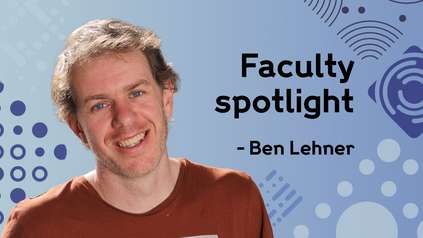
Professor Ben Lehner, lead author of both studies, Head of Generative Genomics at the Wellcome Sanger Institute and Senior Group Leader at the Centre for Genomic Regulation
More information
Publications:
T. Mighell & B. Lehner. (2026) ‘GPCR-MAPS: high-resolution functional and allosteric mapping of G-protein-coupled receptor activation functions and bias’. Nature Structural & Molecular Biology. DOI:10.1038/s41594-026-01907-3
X. Li & B. Lehner. (2026) ‘TF-MAPS: fast high-resolution functional and allosteric mapping of DNA-binding proteins’. Nature Structural & Molecular Biology. DOI:10.1038/s41594-026-01908-2
Funding:
This research was supported by Wellcome.