Genomics Futures workshop: Understanding and engineering genomes and cells for the future
Chaired by Professor Muzlifah Haniffa and Professor Ben Lehner
Overview
Aim
The workshop aimed to create a long-term vision for how we can better understand and engineer living systems (such as cells and DNA) to solve major challenges in health and society.
Importance
Understanding and controlling biology could transform healthcare. Clinical diagnostics and treatments can become more it more predictive, personalised, and effective; not only for individuals but also for entire populations. It could also help tackle global challenges in medicine, environment, and beyond.
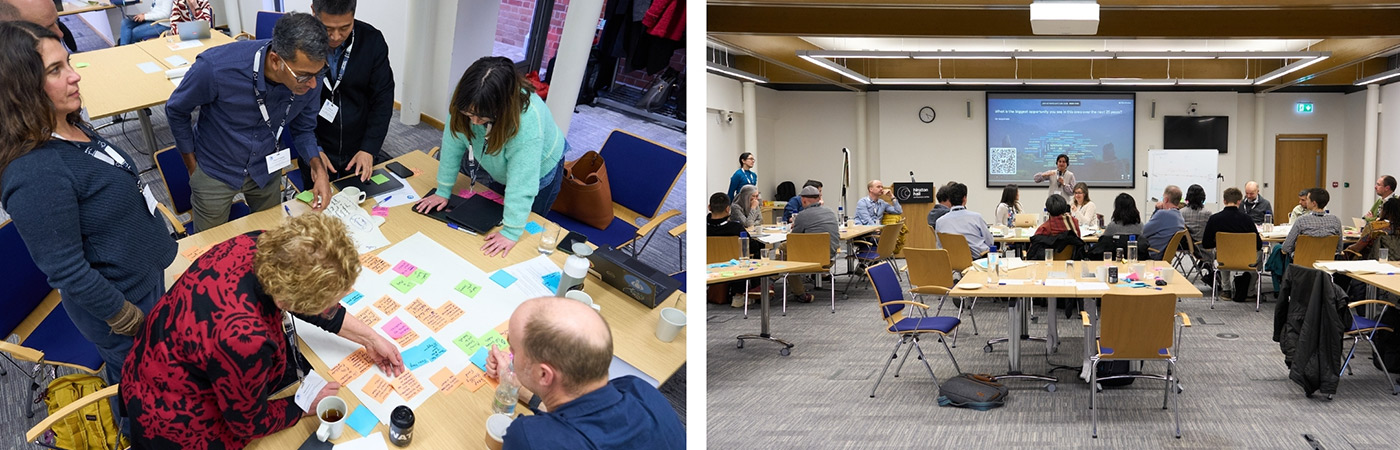
Listen to our Podcasts discussing this Workshop
Listen directly on this page:
Episode 3 Part 1 – Genomics Futures: AI and Synthetic Biology
Listen to “AI and Synthetic Biology: Part 1” on Spreaker.
Episode 3 Part 2 – Genomics Futures: AI and Synthetic Biology
Listen to “AI and Synthetic Biology: Part 2” on Spreaker.
Full Genomics Futures Podcast series
The full Genomics Futures podcast series is available to listen to on Apple Podcasts, Spotify and Spreaker.
Where are we now and where are we going?
We already have powerful tools, especially in artificial intelligence (AI) and synthetic biology, that can predict how biological systems behave. However, we are still limited in fully understanding why things happen. The field is moving toward combining prediction with deeper explanation and the ability to actively design and build biological systems.
Key Challenges
- Limited and biased data, especially lacking global diversity
- Difficulty combining different types of biological data
- Challenges in building and testing complex biological systems
- High costs and technical barriers
- Public concerns and ethical questions about engineering life
- Inequality in access to technologies and benefits
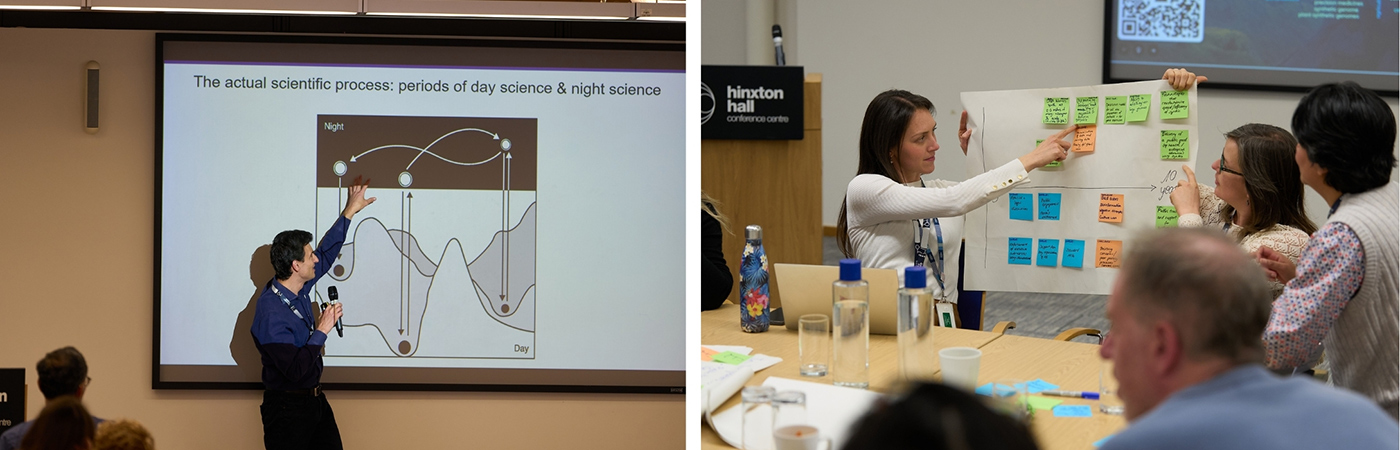
Considering the future
10-year visions
In the next decade, researchers imagine:
- Creating controllable biological systems, such as lab-grown blood cells for studying disease and treatments
- Making genome engineering faster, cheaper, and widely accessible
- Building better models to understand how cells and systems behave and interact
- Using AI and experiments together to uncover rules that govern life
Looking Beyond 2035
Looking further ahead to 2050, the vision is:
- Scientists hope to understand how entire biological systems and ecosystems work together
- AI and humans will likely collaborate closely in making discoveries
- Unexpected breakthroughs will continue to play a major role
- Curiosity-driven research will remain essential, not just goal-oriented science
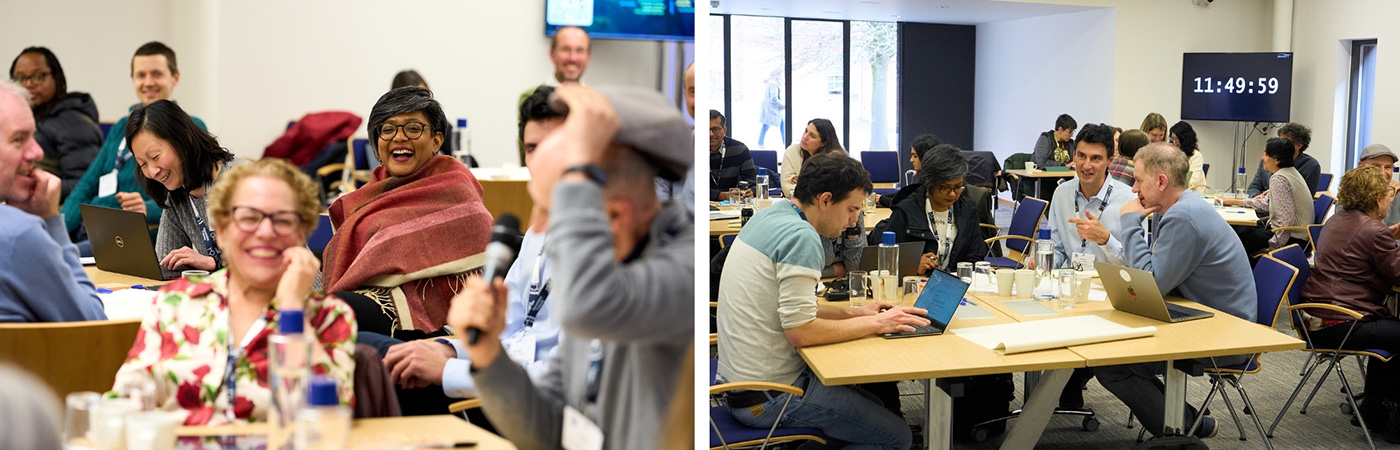
Key discussion themes
- The balance between predicting biology and truly understanding it
- The need for both structured (“day science”) and creative (“night science”) approaches
- Engineering life safely and responsibly
- Ensuring global fairness in who does science and who benefits
- Building public trust and involving society in decisions
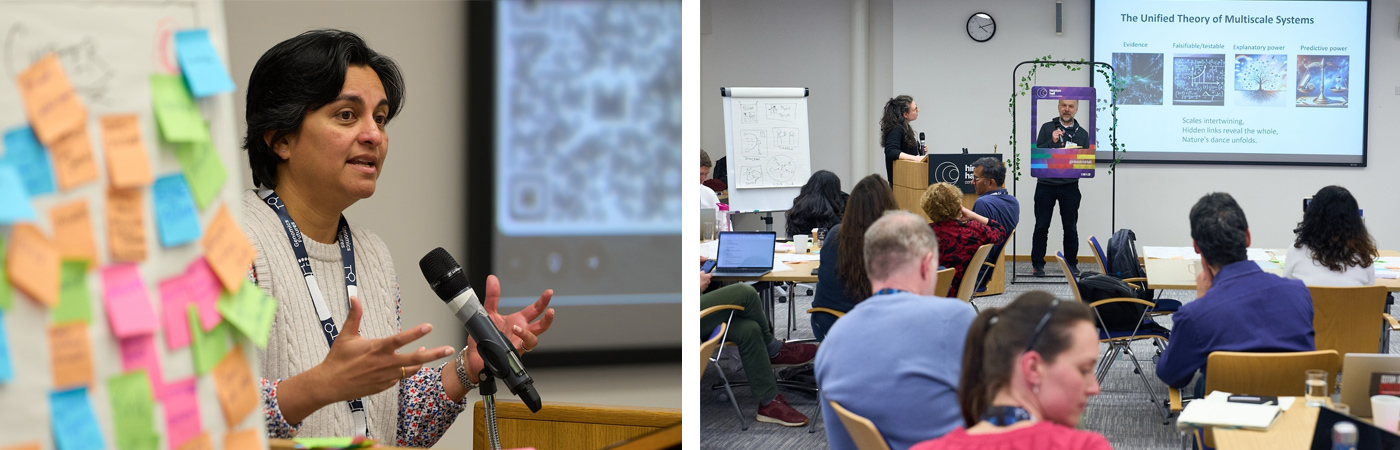
Open Questions
The workshop identified several unresolved challenges:
- Is prediction enough, or do we need full understanding of how biology works?
- How much control over living systems is safe or desirable?
- Can advances in genomics benefit everyone, not just a few?
- How should the public influence scientific progress and its limits?
Conclusion
Biology is becoming a powerful, flexible tool that could reshape healthcare and society. However, progress depends not only on technology, but also on ethical choices, global fairness, public trust, and long-term thinking. The future of this field will be shaped as much by human decisions as by scientific breakthroughs.