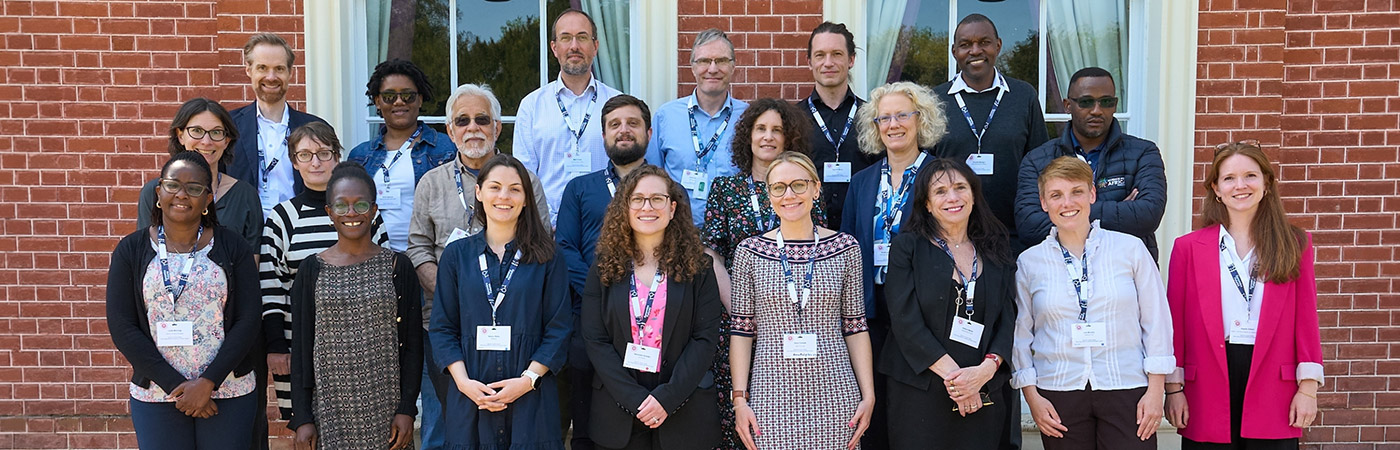
Genomics Futures Workshop: Novel approaches to achieve and deliver impact
Chaired by Matthew Hurles
Overview
Aim
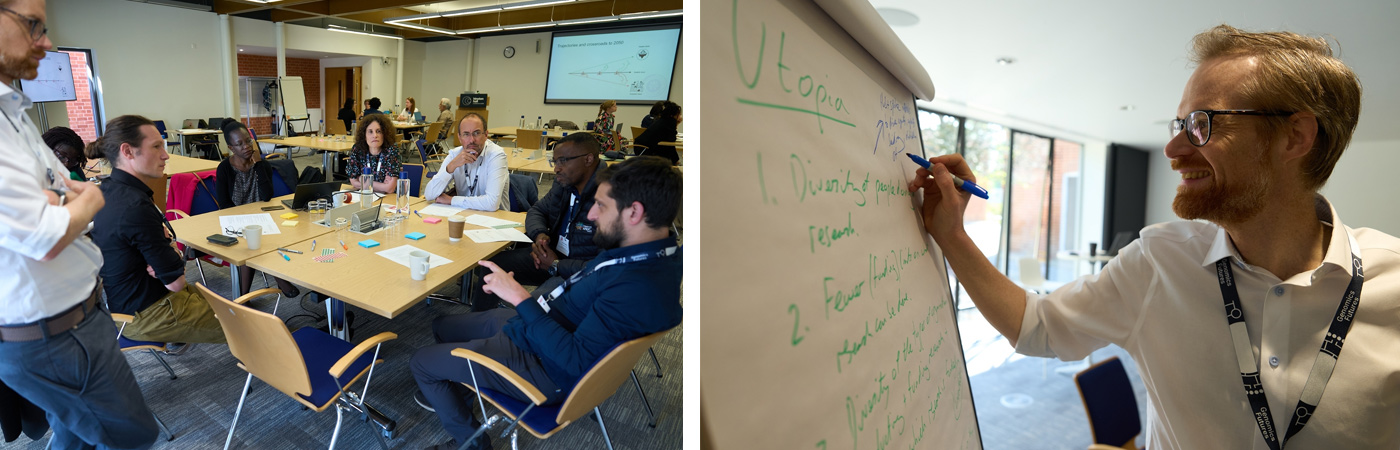
This workshop explored how genomic and life science research could be structured and directed to deliver more effective outcomes and social benefits fairly. Participants examined how advances in artificial intelligence (AI), new research models, and global collaboration could be harnessed to this effect.
Importance
Over the past 25 years, technologies such as genomics, AI, and large international collaborations have transformed research. However, the systems that govern and fund science have changed much more slowly. Participants agreed that if future discoveries are to benefit everyone fairly and sustainably, major changes are needed in how research is organised, funded, governed, and shared.
The discussions also highlighted that scientific progress could move in very different directions depending on decisions made today. Attendees sought to outline ways in which future systems could become more open, inclusive, and trustworthy and prevent the fruits of genomic research becoming centralised and controlled by a small number of powerful organisations or countries.
Listen to our Podcast discussing this Workshop
Listen to “Impact” on Spreaker.
The full Genomics Futures podcast series is available to listen to on Apple Podcasts, Spotify and Spreaker.
Where are we now and where are we going?
AI is already helping scientists make discoveries faster. Tools such as AlphaFold show how AI can speed up biological research, but they also reveal important challenges concerning infrastructure, data sharing, and governance.
Research organisations are experimenting with new forms of collaboration that aim to tackle large scientific challenges outside traditional academic or commercial systems.
At the same time, there is growing recognition that science must become more globally inclusive. Many current systems still favour wealthier countries, while lower-income regions face barriers to accessing relevant technology and funding, and determining the focus of research endeavours.
Key Challenges
Major challenges identified by the participants included:
- Ensuring AI is used ethically and transparently
- Preventing monopolies over data, AI systems, and research agendas
- Reducing inequalities in global access to technology
- Building public trust in science
- Creating fairer funding and governance systems
- Countering political or commercial influences that could weaken international collaboration
- Supporting long-term, high-risk, blue-sky research
- Ensuring equitable access to the benefits delivered by genomic research
- Maintaining human scientific skills and knowledge alongside growing use of AI
Attendees also warned that climate crises, geopolitical tensions, and unequal power structures could make collaboration more difficult.
Considering the future
10-year visions
In the next 10 years, participants imagined that:
- AI could be safely integrated into laboratories and research workflows
- Faster and cheaper technologies will deliver larger and better-quality datasets
- More collaboration takes place across scientific disciplines
- Barriers to entering research careers are lowered
- More diverse groups of people are able to contribute to science
- Pipelines and mechanisms for sharing and translating discoveries into real-world benefits are improved
However, attendees also highlighted potential dangers that would need to be guarded against:
- AI systems being misused or controlled by a small number of organisations
- Funding and research opportunities becoming more unequal
- Public trust in science declining due to a failure of engagement between researchers and society
- Research priorities becoming driven by political or commercial interests that do not prioritise public benefit
Considering the future looking beyond 2035
By 2050, participants envisioned two contrasting futures.
In a positive future:
- AI supports healthier societies and more effective scientific discovery
- Research systems become more collaborative, transparent, and globally inclusive
- Governance operates across local, national, and international levels
- Data is widely accessible, representative, and beneficial to the public
- Research includes perspectives from social sciences and humanities, helping address issues of ethics, power, and fairness
- Innovation systems in lower- and middle-income countries become stronger and more self-sustaining
In a negative future:
- AI and scientific knowledge become concentrated in the hands of a few countries or corporations
- Scientific collaboration breaks down because of geopolitical conflict or climate pressures
- Wealthy nations dominate research agendas
- Access to new technologies becomes increasingly unequal
- Overreliance on AI weakens human expertise and slows scientific progress
- The public become distrustful of scientific research and the solutions it delivers
Key discussion themes
The workshop focused on three connected themes:
- AI and data integration
How AI could transform scientific discovery, data analysis, and decision-making. - Research organisations and funding models
How institutions, funding systems, and new organisational models may need to evolve to support ambitious, long-term research. - Globally equitable life sciences research
How to ensure scientific advances benefit people fairly across different regions and communities worldwide.
Open Questions
The workshop identified several unresolved challenges:
- Who should control scientific data and AI systems?
- How can research remain transparent and accountable?
- What balance should exist between national interests and global cooperation?
- How can funding systems become more inclusive?
- How can scientific careers remain attractive and sustainable?
- What role should social sciences and humanities play in shaping science policy?
- How can lower-income countries build stronger local innovation systems?
- How can society ensure that future technologies benefit the public rather than a small elite?
Conclusion
The workshop concluded that the future of science will depend not only on technological breakthroughs, but also on the choices societies make about governance, collaboration, fairness, and inclusion. AI, new research models, and global partnerships could greatly improve health and scientific understanding, but only if systems are designed to distribute benefits widely and responsibly. The decisions made over the coming years will play a critical role in determining whether future science becomes more open and equitable or more unequal and fragmented.