

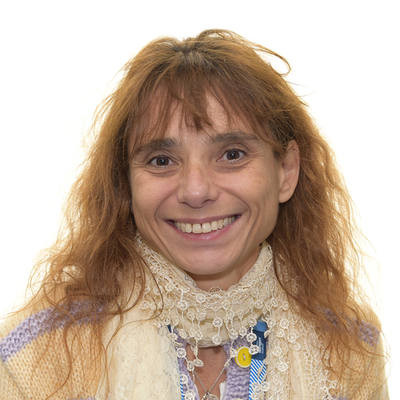
Dr Laure Gambardella
Senior Staff Scientist
I lead a cross-functional initiative to improve the efficiency, scalability, and sustainability of complex skin organoid production from human pluripotent stem cells. While this system provides a powerful model for studying human skin development and disease, it requires approximately 150 days to generate mature organoids, with outcome uncertainty persisting for up to 75 days. My work focuses on enabling earlier prediction of success and final organoid quality through machine learning–driven automated quality control using brightfield imaging. This approach will reduce costs, enhance reproducibility, and improve data quality, supporting lab-in-the-loop systems, downstream drug screening, and alignment with Institute strategy.
This initiative is a collaboration between Cellular Services, led by Amy Yeung, and the Haniffa Lab within Cellular Genomics, with contributions from multiple operational teams across the Institute.
I joined the Sanger Institute in 2021, where I spent four years in Muzz Haniffa’s group establishing the skin organoid platform before transferring it to Cellular Services.
In 2024, I was enrolled in the Accelerating Talent Programme, a leadership initiative selecting 24 high-potential staff and designed to develop the skills of the future Institute leaders. As part of this programme, I co-led a project to strengthen a culture of innovation across the Institute, culminating in the organisation of the inaugural Sanger Innovation Day Symposium.
Prior to joining Sanger, I worked at leading research institutions, including EPFL, the Babraham Institute, and the Cambridge Stem Cell Institute. My work has consistently focused on applying advanced methodologies—such as live 3D confocal imaging, stem cell engineering, and single-cell biology—to accelerate scientific discovery.
My timeline
Senior Staff Scientist - Cellular Genomics Admin Team - The Wellcome Trust Sanger Institute
Senior Staff Scientist - Haniffa Group - The Wellcome Trust Sanger Institute
Research Associate - Sinah Lab - Cambridge Stem Cell Institute
Research Associate - The Babraham Institute - Cambridge
Post-doc - EPFL - Lausanne
Post-doc - Ecole Normale Superieure - Paris
Research Associate - Department of Haematology - Cambridge
PhD - Ecole Normale Superieure - Paris