

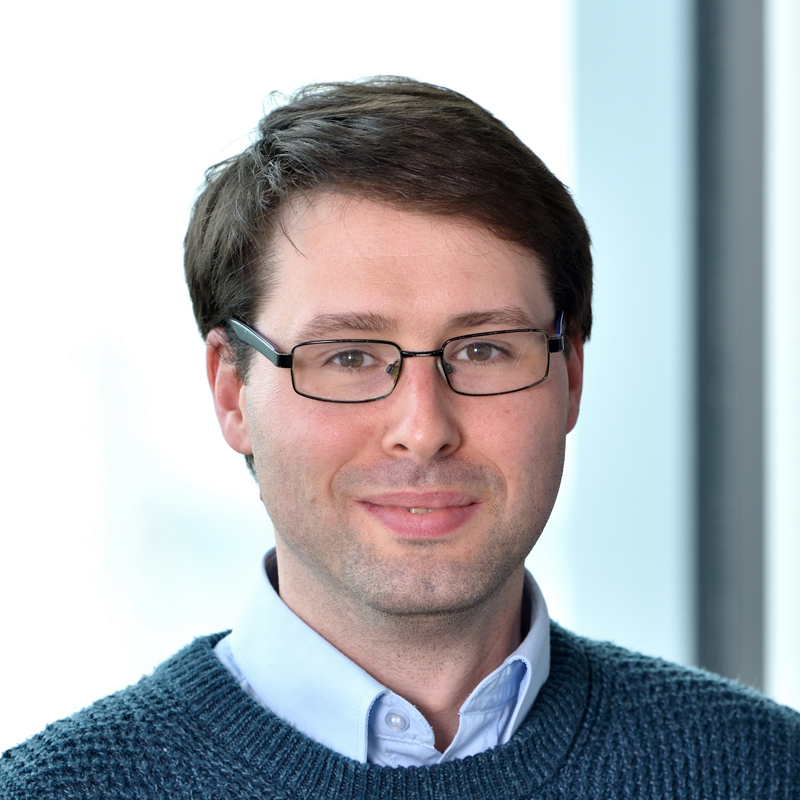
Dr Nicholas Croucher
Group Leader
My research passion
Ever since I studied the evolutionary epidemiology of a single strain of Streptococcus pneumoniae as part of my PhD research, I have been fascinated by how bacteria evolve to become more transmissible and escape vaccination programmes. In particular, I seek to understand the biology of multi-strain bacterial populations to discover the mechanisms that power antibiotic resistance, virulence and antigen expression, and how these genomic elements are then shared between strains.
Because such microbes vary extensively in their physical and genomic characteristics, my research covers in vitro and in silico techniques, including:
- laboratory molecular microbiology
- analysis of genomic datasets
- computational modelling.
My research goals
My aim is to create techniques and understanding that will provide governments and clinicians with the tools they need to effectively counter and treat bacterial infectious diseases. To achieve this, my research seeks to move bacterial research from observing the spread and virulence of diseases to generating predictive models of how bacterial strains acquire antimicrobial resistance, how they rise to dominance, and the level of disease burden they cause.
Key motivating questions for my research include:
- How do bacterial strains diversify?
I seek to use experimental, statistical and artificial intelligence methods to understand the contributions of different types of recombination and selection to the diversification of bacterial species. - How does the interaction between host and pathogen drive bacterial strain diversification?
I hope to lay the foundations for future vaccine design by exploring the co-evolution between bacterial antigens and host immunity. - How does competition between bacterial strains drive pathogen dynamics at the species level?
I am keen develop reliable methods to forecast how bacterial infections change over time by studying how bacterial strains emerge, evolve and rise to dominance within individuals’ microbiomes. - How do pathogens interact at the level of health systems?
My hope is that my team’s research will power public health interventions with genomic insights to enable health systems to model, forecast and respond to antimicrobial resistance in bacterial infections. - What can new sequencing technologies enable?
I and my team seek to provide insights into bacterial genome biology that will drive the next wave of bacterial genomics research by developing tools and techniques that exploit the latest advances in sequencing technologies.
Nurturing early career researchers in my team
I believe that we need diversity of ideas, experience and skills to deliver the next wave of genomic discovery and translation into improved healthcare. For this reason, I have been actively engaged in training and supporting genomic researchers, both within in my team and across the globe, to grow their experience and develop their careers. I am enthusiastic about discovering and delivering what can be done to improve the research environment for the next generation of genomics and infectious disease researchers.
My timeline
Associate Professor in Bacterial Genomics, MRC Centre for Global Infectious Disease Analysis, Imperial College London
Senior Lecturer in Bacterial Genomics, MRC Centre for Global Infectious Disease Analysis, Imperial College London
Wellcome Sir Henry Dale fellowship (2014-2023) supervised by Prof. Christophe Fraser and Prof. Neil Ferguson, Imperial College London
AXA Foundation Research Fellow (2011-2013), Harvard School of Public Health
PhD student (2007-2011), supervised by Prof. Stephen Bentley and Prof. Julian Parkhill, Pathogen Sequencing Unit, Wellcome Sanger Institute
BA (Hons.), Natural sciences tripos (Biochemistry) (2004-2007), class I, Churchill College, University of Cambridge