

Laboratory practices
The Sanger Institute is committed to embedding sustainable lab practices into our science, recognising that responsible laboratory operations play a vital role in achieving our Net Zero ambitions.
Our laboratory practices goals
Our sustainable lab practice goals are to:
- Carry out our research in an environmentally responsible manner, minimising the impact of our lab practices.
- Embed consistent, high-quality sustainability standards across all labs, making sustainability part of daily lab practices.
- Use frameworks like LEAF to set targets, quantify savings, and monitor continuous improvement, empowering all lab staff to adopt climate-conscious practices that support world-leading impact.

At the Sanger Institute, we are taking action to make our laboratory practices more sustainable by improving resource efficiency, reducing waste, and promoting the use of more sustainable equipment and consumables. The steps below outline the measures we’re taking, and have already taken, to support more sustainable ways of working across our research spaces.
 Adoption of the Laboratory Efficiency Assessment Framework (LEAF) has enabled Sanger labs to achieve measurable sustainability improvements and foster a culture of responsible research. Our commitment is for all labs to achieve Silver LEAF status, the recognised benchmark for environmental best practice across the Institute. This provides a consistent standard for sustainability and positions the organisation strongly as funder expectations continue to tighten.
 We’ve introduced equipment purchasing guides to help teams choose more energy-efficient, longer-lasting, and environmentally responsible lab equipment. In addition, we’re enabling labs to share equipment internally through our Waste Action Reuse Portal (Warp-It), reducing unnecessary purchases and preventing usable items from becoming waste.
 We’re supporting and encouraging labs to switch to more sustainable consumables, helping reduce single-use plastics and overall environmental impact.
 We’re improving the way lab waste is segregated through standardised signage, as well as exploring new initiatives to enable us to recycle a larger percentage of lab waste.
Supporting Sustainable Development Goals
The United Nations have created a set of 17 global Sustainable Development Goals (SDGs) that were adopted by all UN Member States in 2015 as part of the 2030 Agenda for Sustainable Development.
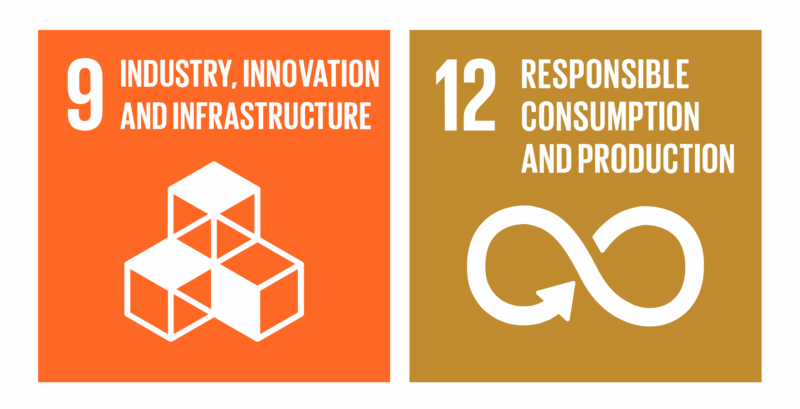
Sustainable lab practices supports two of the of UN Sustainable Development Goals including:
- Industry, innovation and infrastructure (to build resilient infrastructure, promote inclusive and sustainable industrialization and foster innovation).
- Responsible consumption and production (to ensure sustainable consumption and production patterns).
We are proud to support these goals and we developed our Environmental Strategy to embrace and fulfil these goals.
Sanger Sustainability Strategy
Reducing and promoting responsible energy use is just one part of our wider Sanger Sustainability Strategy. It divides our activities into key areas that reflect our most important environmental impacts.
Aligning sustainability with our values and behaviours is central to creating a culture of responsibility and innovation. By embedding sustainability into everyday decisions, we can drive lasting change.
Sustainable lab practices is just one of 12 themes you can explore, each contributing to our shared goal of a more sustainable future.
Explore how we are delivering sustainable change - click on the icons below
 |
 |
 |
 |
 |
 |
 |
 |
 |
 |
 |
 |